Buying a Coffee Cart: A Practical Checklist Before You Order
What to check before buying a coffee cart: size and doorways, materials, water and power, transport, branding, lead time and what is (and is not) included.
- Published
- Read
- 4 min
 Business Guides
In this article · 11 sections
Buying a coffee cart is mostly a measuring exercise. The right cart is the one that fits your equipment, your venues and the vehicle you will move it in. Get those three right and the style decisions are the easy part.
This checklist walks through every question we ask customers before we build a cart, so you can compare any coffee cart for sale — ours or anyone else's — on the things that actually matter.
1. Start With Your Equipment, Not the Cart
List the espresso machine, grinder(s), knock box and any brewer you will use, with their footprints and weights. A single-group setup usually fits a 48–60 inch counter; a two-group machine with a dedicated grinder needs more. Leave working space for cups and milk pitchers on top of the equipment footprint. Our standard coffee cart dimensions guide has the full reference table.
2. Measure Your Venues
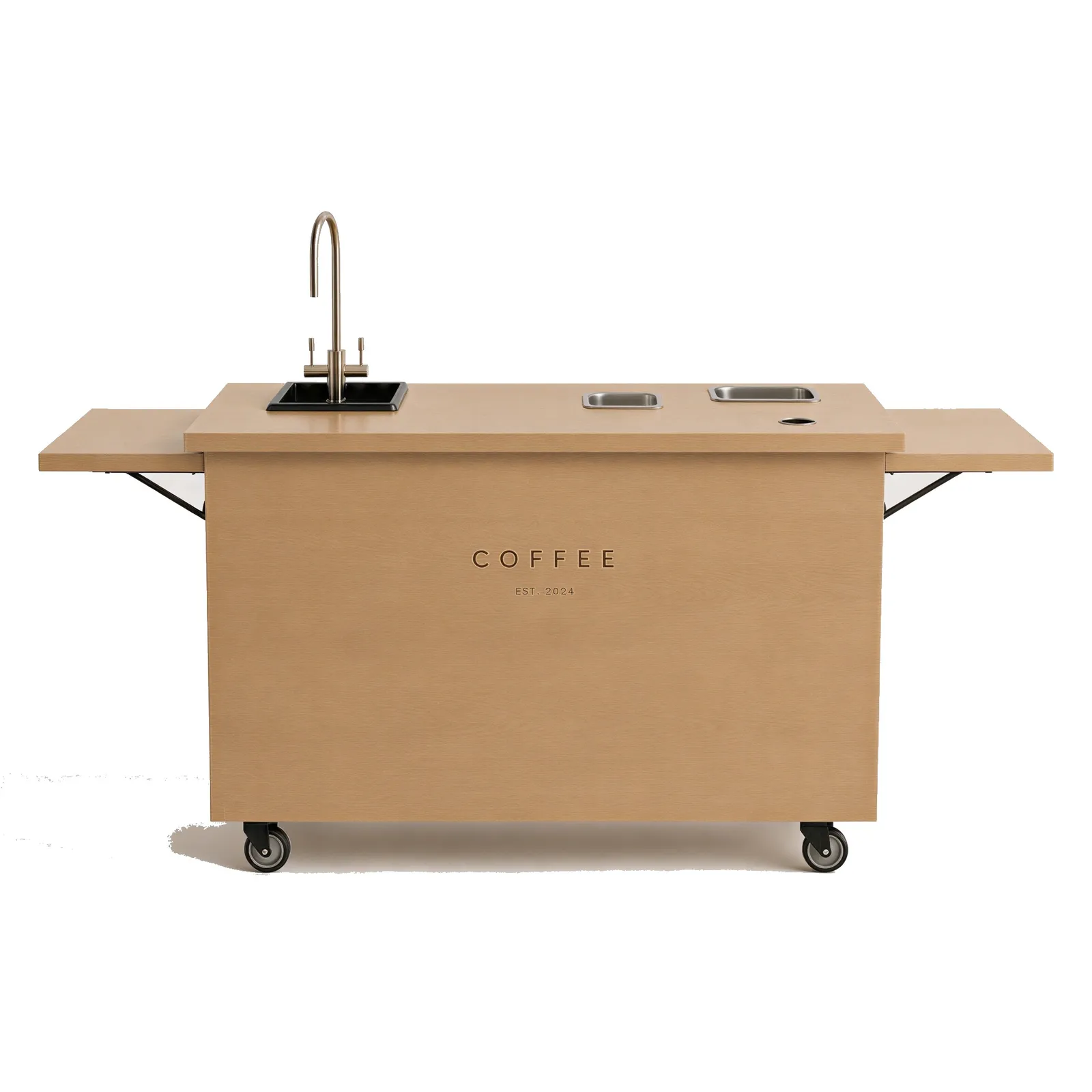
Write down the narrowest door, elevator and corridor you expect to pass through. A cart that rolls through a standard 32 inch doorway opens hotel lobbies, offices and wedding venues that a wider cart cannot reach. If you need more counter space than that allows, ask for a collapsible coffee cart or fold-down side shelves.
3. Decide on Materials
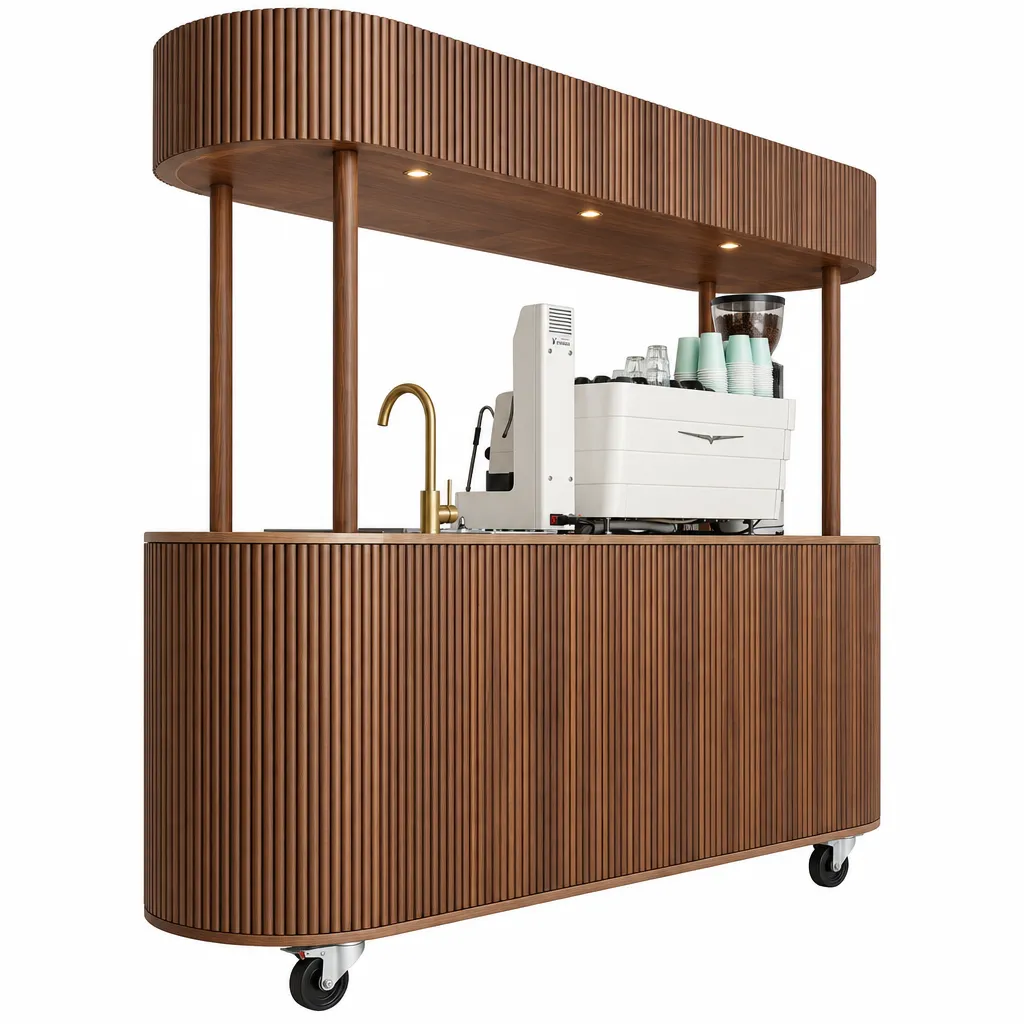
- Wood: warm, photogenic and easy to brand. Ideal for weddings, hotels and boutique events. Look for a sealed, weather-resistant finish.
- Stainless steel: easy to sanitize but more industrial in look.
- Mixed: a wooden body with a stainless or laminate prep surface around the machine is often the best of both.
4. Plan Water and Power
Many US health departments require a handwashing sink plus fresh and grey water tanks for open drink prep. Ask whether the cart has compartments sized for your tanks and a sink cut-out if you need one. Then check your machine's power draw: many commercial espresso machines need a dedicated circuit, so confirm venue power or generator capacity before you book events. Always get your local health department's mobile unit checklist before finalizing the design.
5. Think About Transport
Measure the cargo space of the van you will use. A cart that folds or breaks down can travel in a standard van, while a larger fixed cart may need a trailer. Locking casters matter too: they keep the cart steady on uneven venue floors.
6. Branding
Your coffee cart is your storefront. Check what branding is possible: paint or stain colors, a front panel for your logo, laser engraving, menu boards. Custom work is easiest to add before the build starts.
7. Ask What Is Included
Coffee cart listings vary a lot. Some include equipment; most, including ours, do not. Our carts are built around the espresso machine and grinder you bring, so the counter, cable pass-throughs and storage fit your exact gear. Make sure you know whether you are buying a cart, a cart plus equipment, or a DIY plan.
8. Lead Time and Delivery
Ask how long the build takes and how the cart arrives. Our custom builds typically leave the workshop within 5 to 7 business days of design approval and ship fully assembled in an ISPM-15 wooden crate with insured freight — no flat-pack assembly on arrival.
9. Budget for More Than the Cart
The cart is only one line in your startup budget. Equipment, power, permits, insurance and opening stock usually cost more than the cart itself. See our coffee cart cost breakdown for a full line-by-line budget.
Quick Checklist
- Equipment list with footprints and weights
- Narrowest doorway and elevator measurements
- Material choice for body and prep surface
- Sink, water tank and power plan checked with your health department
- Van or trailer measurements
- Branding files ready
- Clear answer on what is included
Ready to compare models? Browse our coffee carts for sale or request a custom build sized to your equipment.
Frequently asked questions
What size coffee cart do I need?
Size it around your equipment. A single-group espresso setup usually fits a 48–60 inch counter, while a two-group machine with a dedicated grinder needs more. Check that the cart still fits through the narrowest door at your venues.
Does a coffee cart come with an espresso machine?
It depends on the seller. Our carts do not include espresso machines or appliances; we build the counter, cable pass-throughs and storage around the equipment you already own or plan to buy.
Do I need a sink on my coffee cart?
In many US cities and counties, yes — a handwashing sink with fresh and grey water tanks is required for open drink prep. Rules vary, so ask your local health department for their mobile unit checklist before ordering.
Topics
- Buying a Coffee Cart
- Coffee Cart for Sale
- Buying Guide
- Mobile Coffee Business
Part of the Cart for Business workshop team, designing and building commercial coffee, bar and food carts.
About our workshopBuild your business today.
Explore turnkey commercial carts or design your own — shipped ready to trade.