







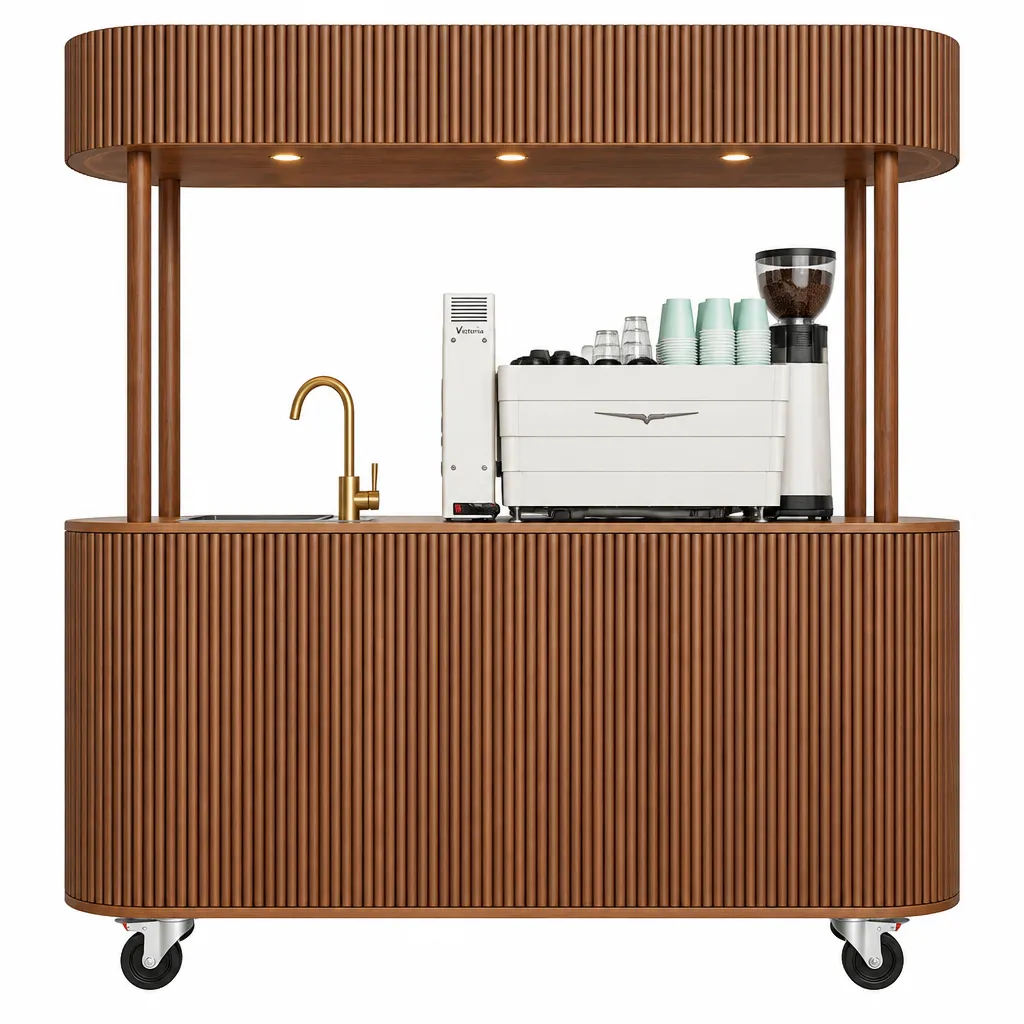
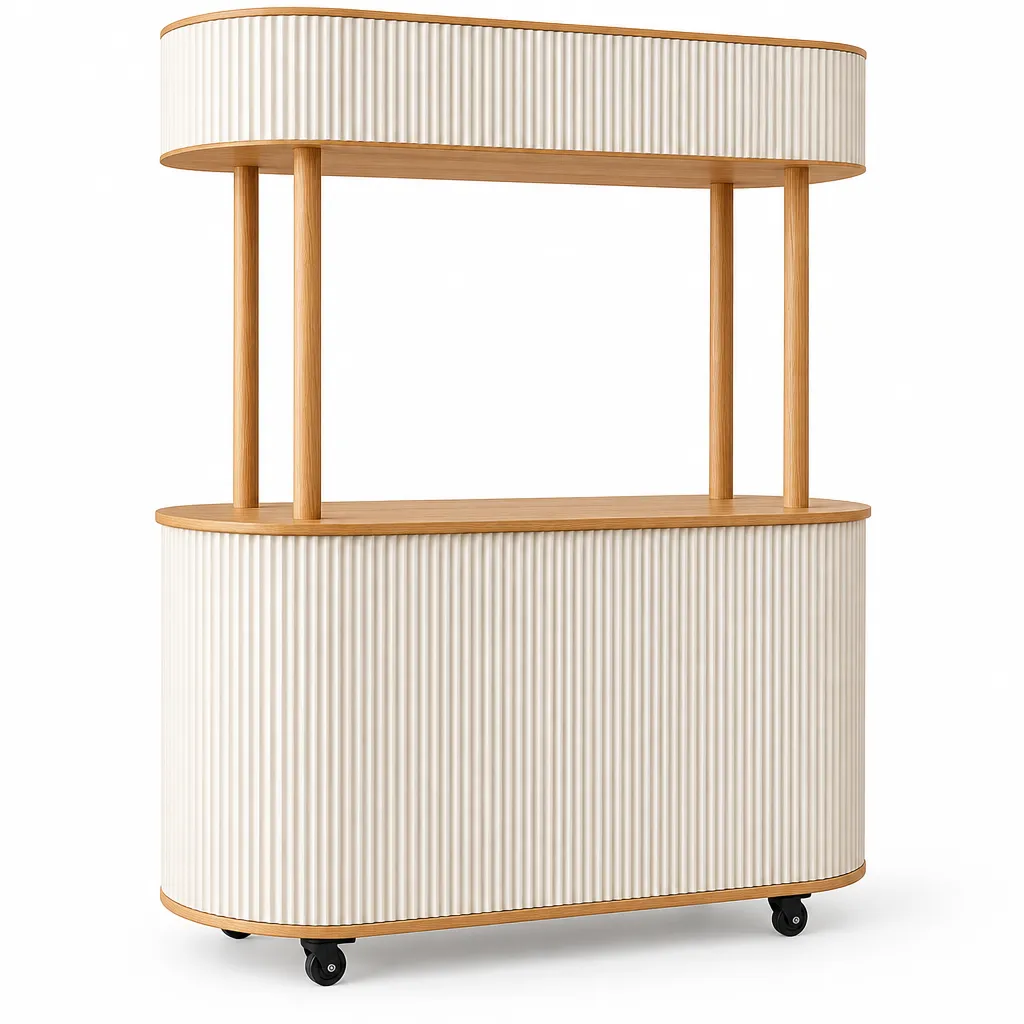
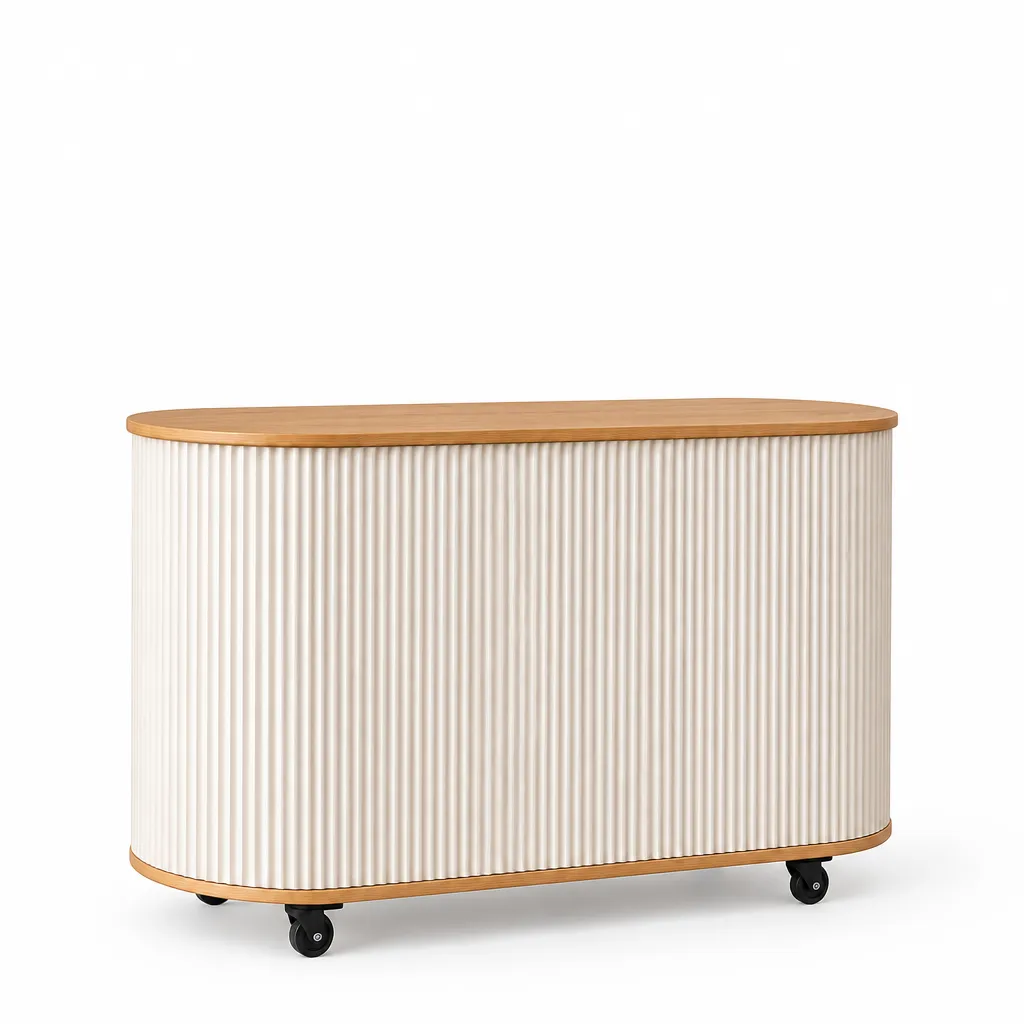
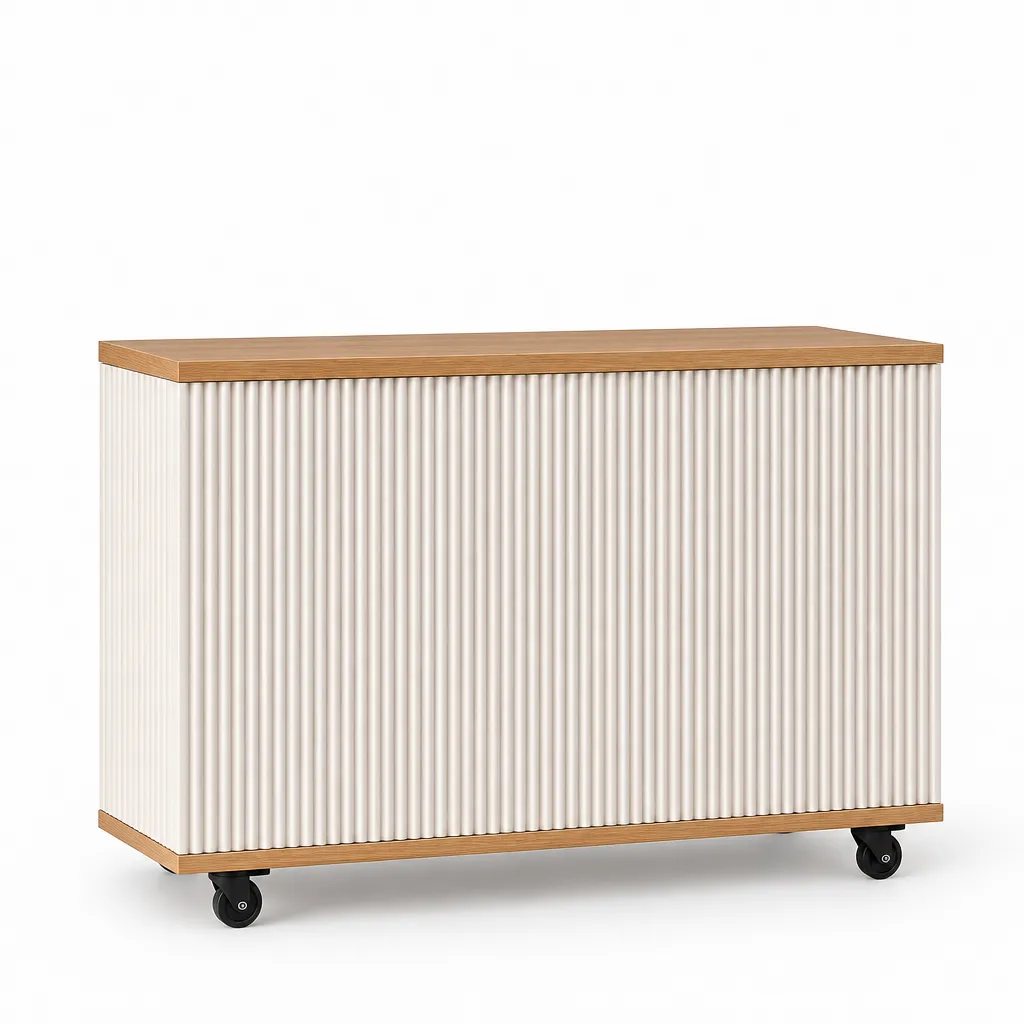
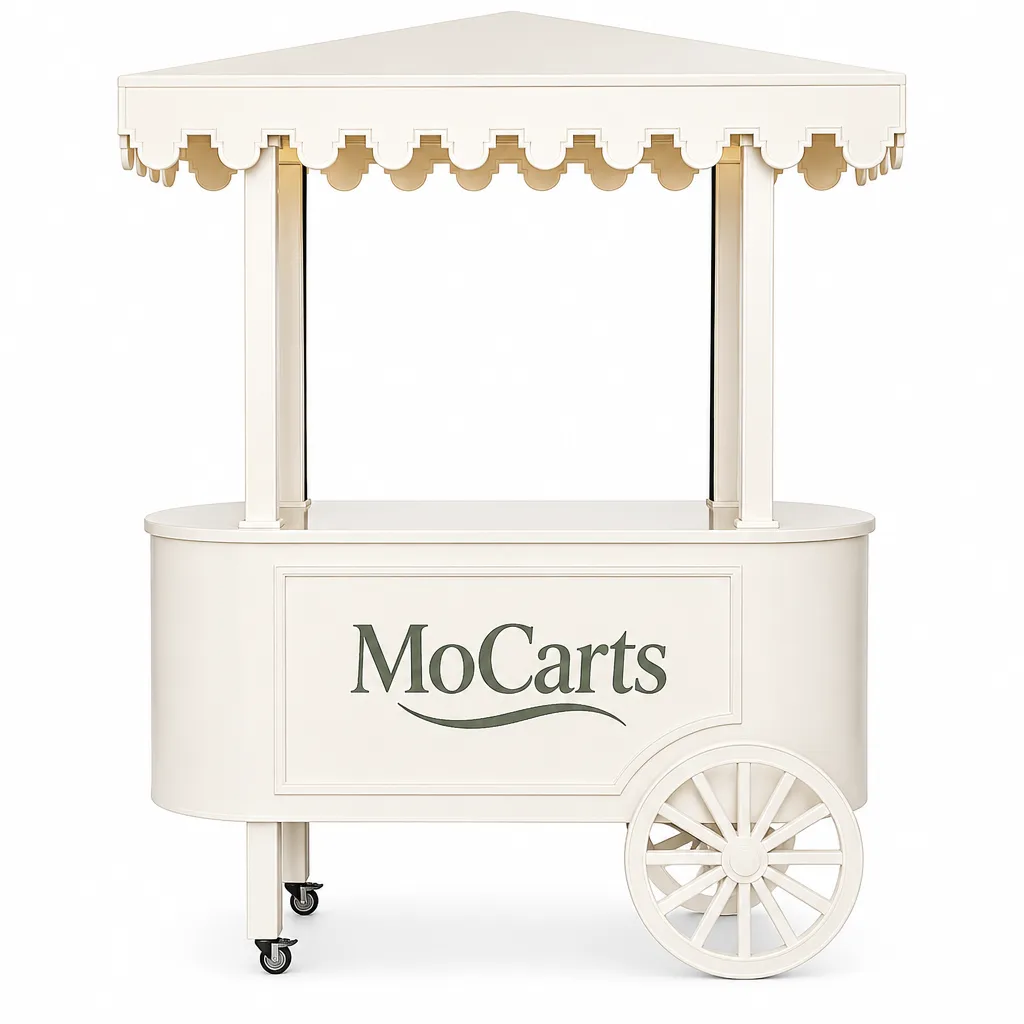
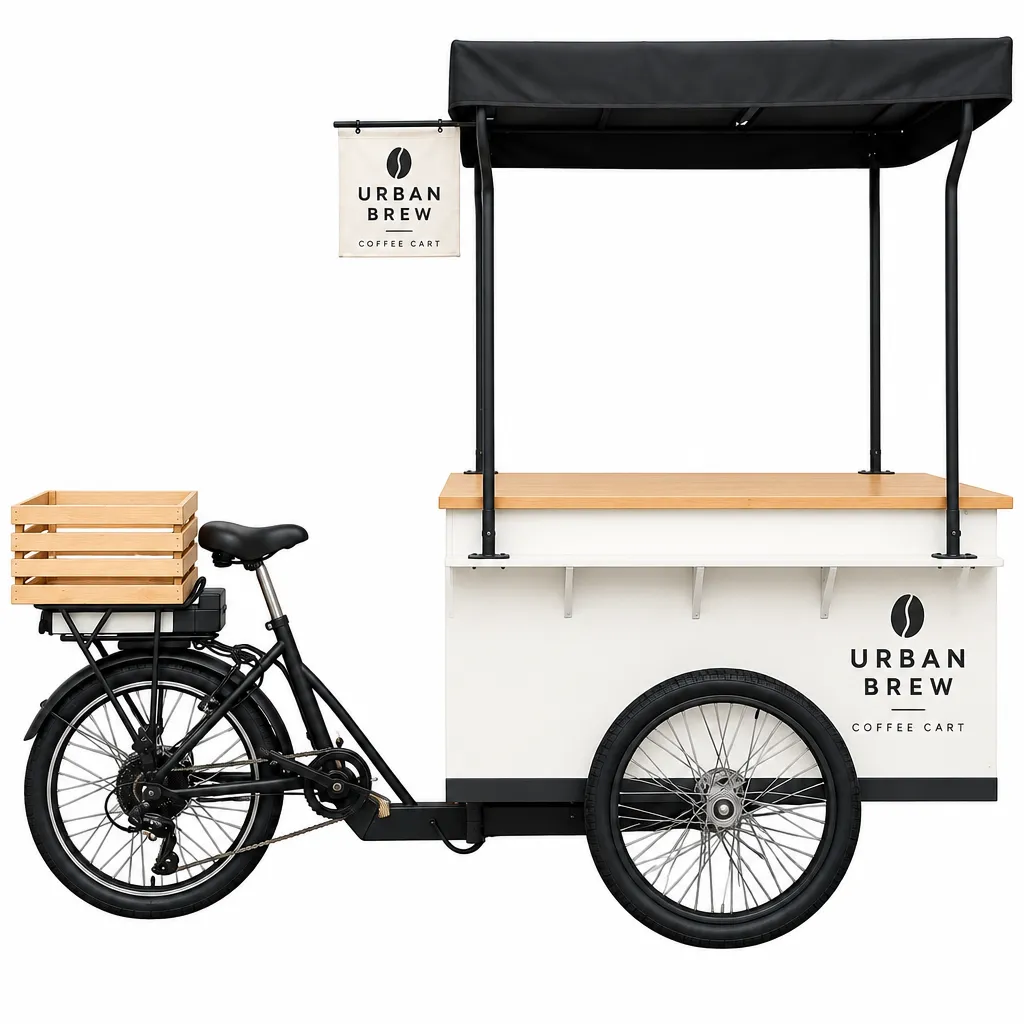
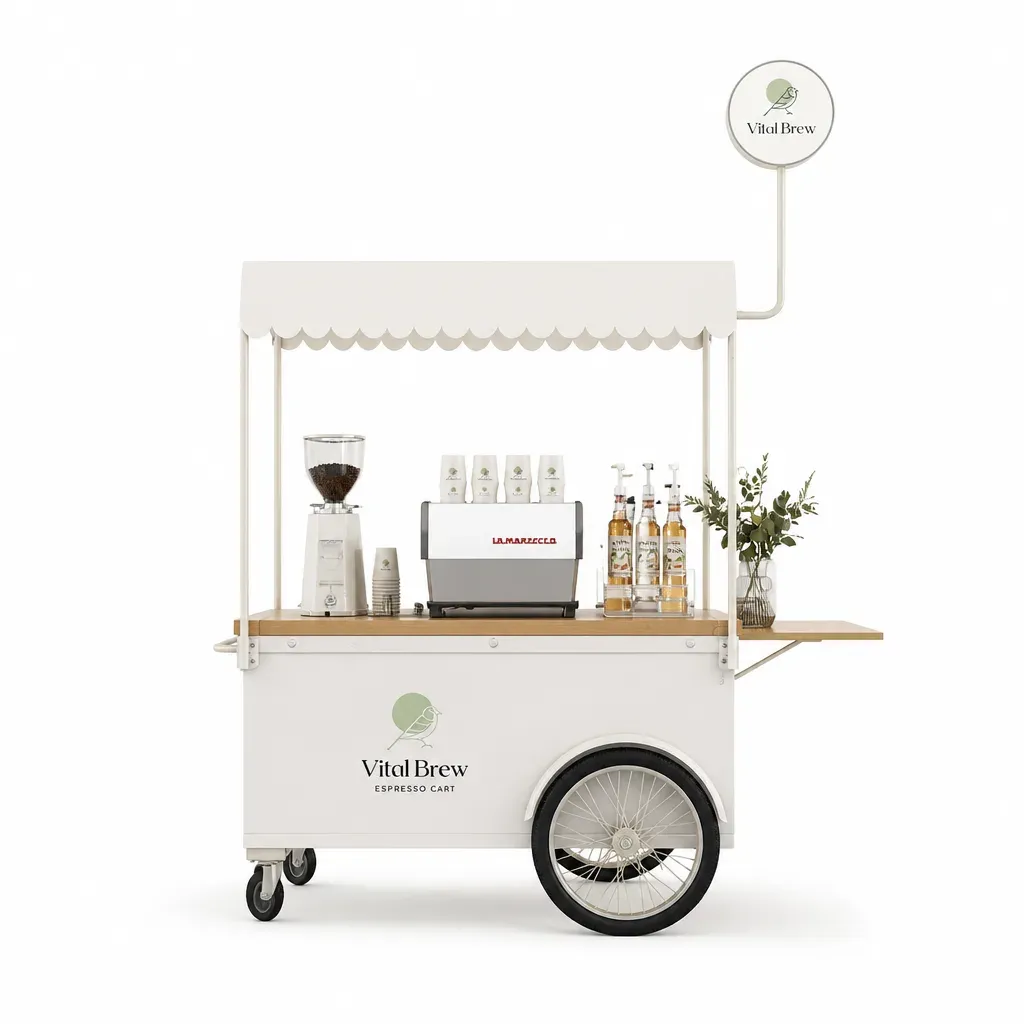
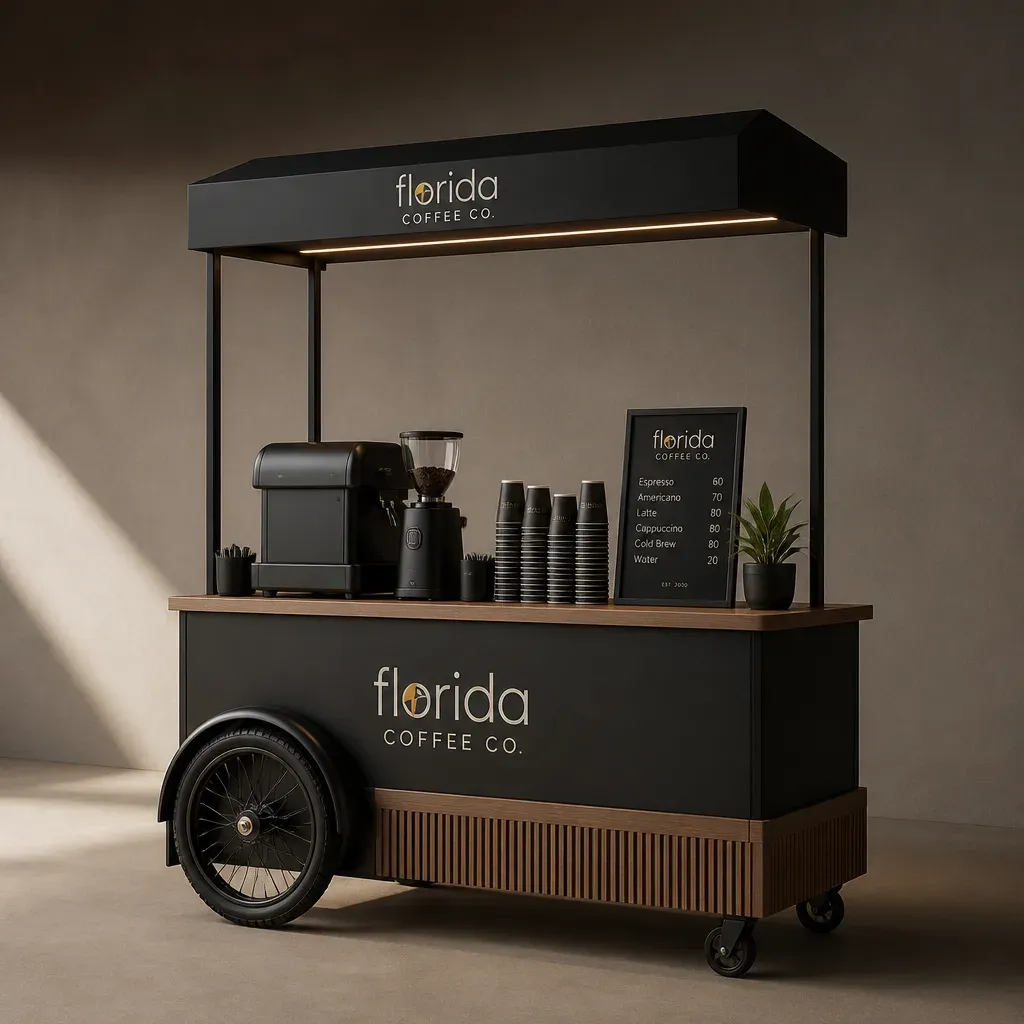
The coffee cart buyer's guide
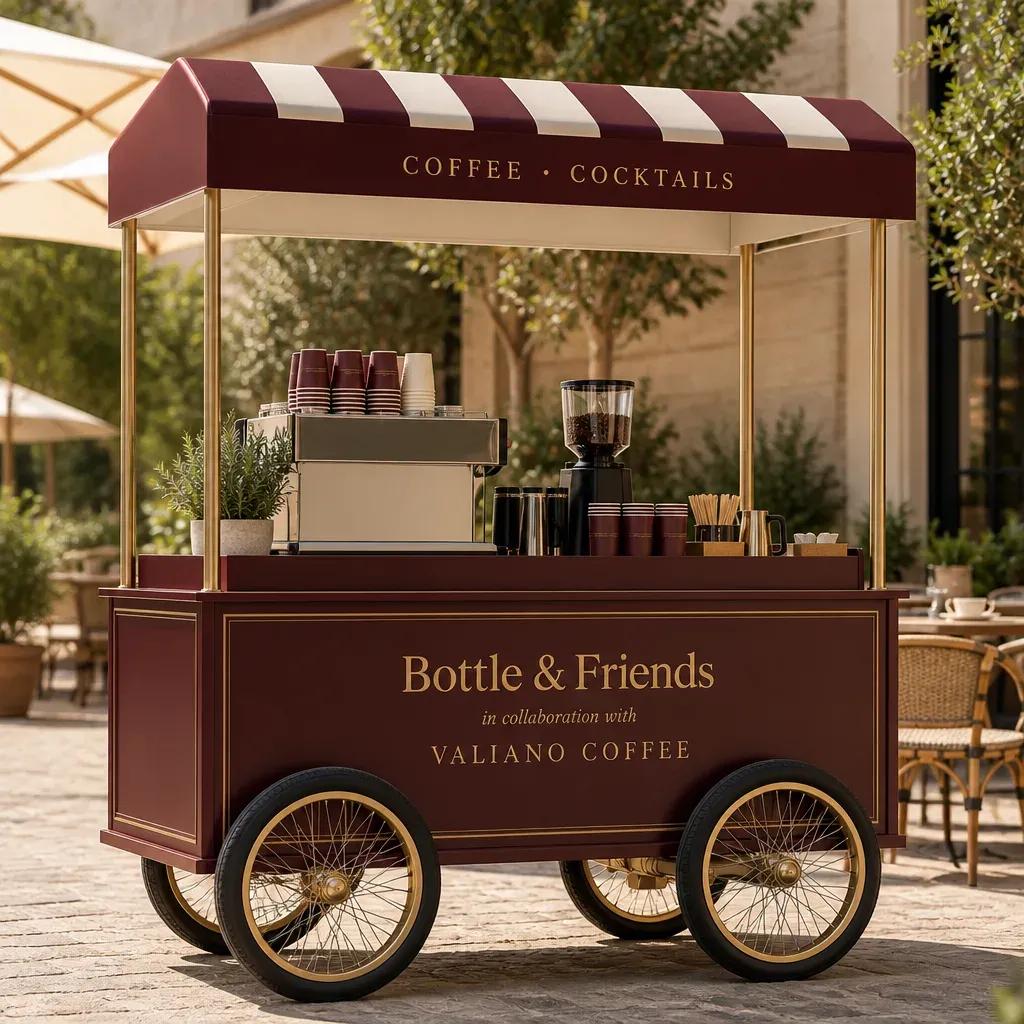
A mobile coffee cart has to do two jobs at once: carry heavy espresso gear safely and look good enough to sit in a hotel lobby or wedding venue. Every cart we build is designed in our Istanbul workshop around the machine, grinder and water setup you already own, then shipped fully assembled and ready to roll.
How to choose the right coffee cart size
Start with your equipment, not the cart. Measure the footprint of your espresso machine, grinder, knock box and any second grinder, then add working space for cups and milk pitchers. Most single-group espresso carts land between 48 and 60 in wide, while two-group setups with a dedicated milk station usually need 60 to 72 in of counter.
Depth matters as much as width. A counter depth of 24 to 30 in leaves room behind the machine for cables and water lines without pushing the barista too far from customers. Keep the working counter around 36 in high so pulling shots and steaming milk is comfortable over a full shift.
Finally, check your venues. Measure the narrowest door, elevator and corridor you expect to pass through. A cart that fits through a standard 32 in doorway opens far more indoor events than one that only works outdoors.
Coffee cart materials: solid wood vs. stainless steel
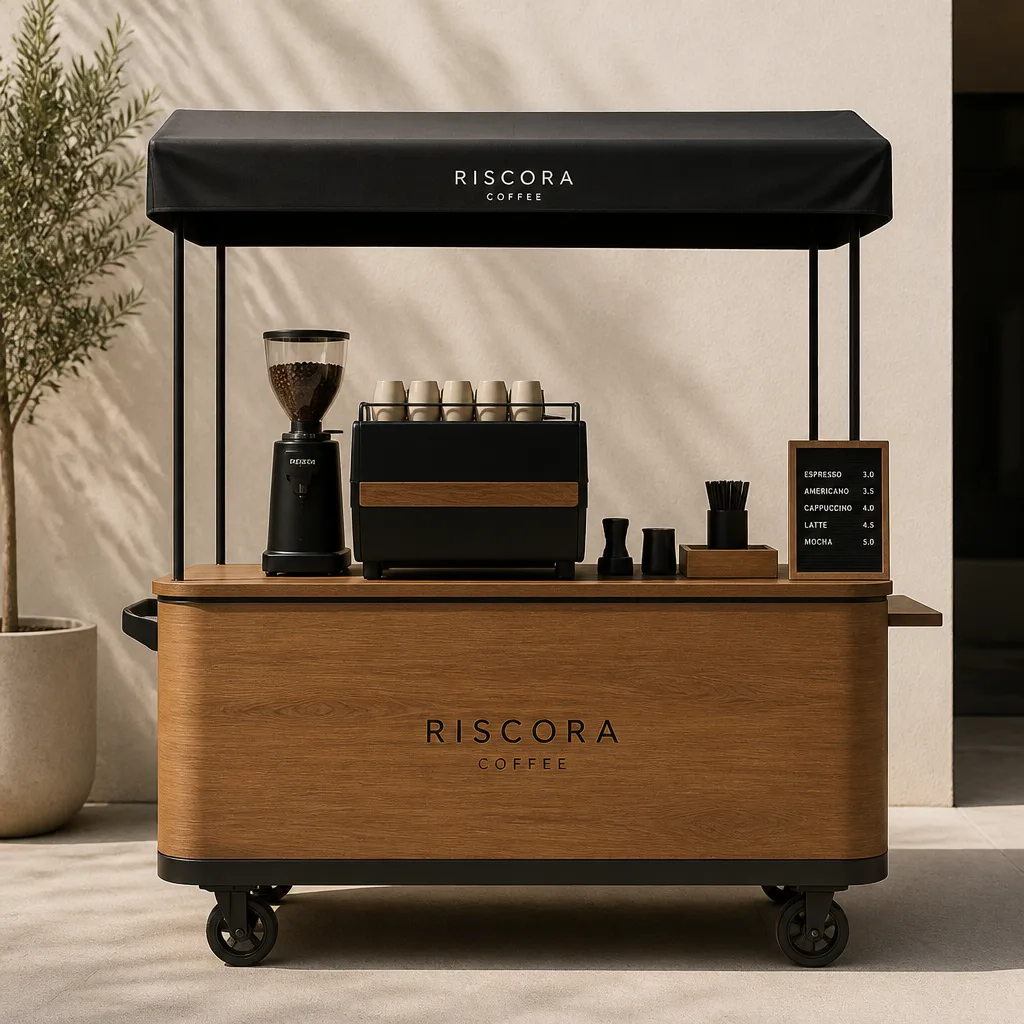
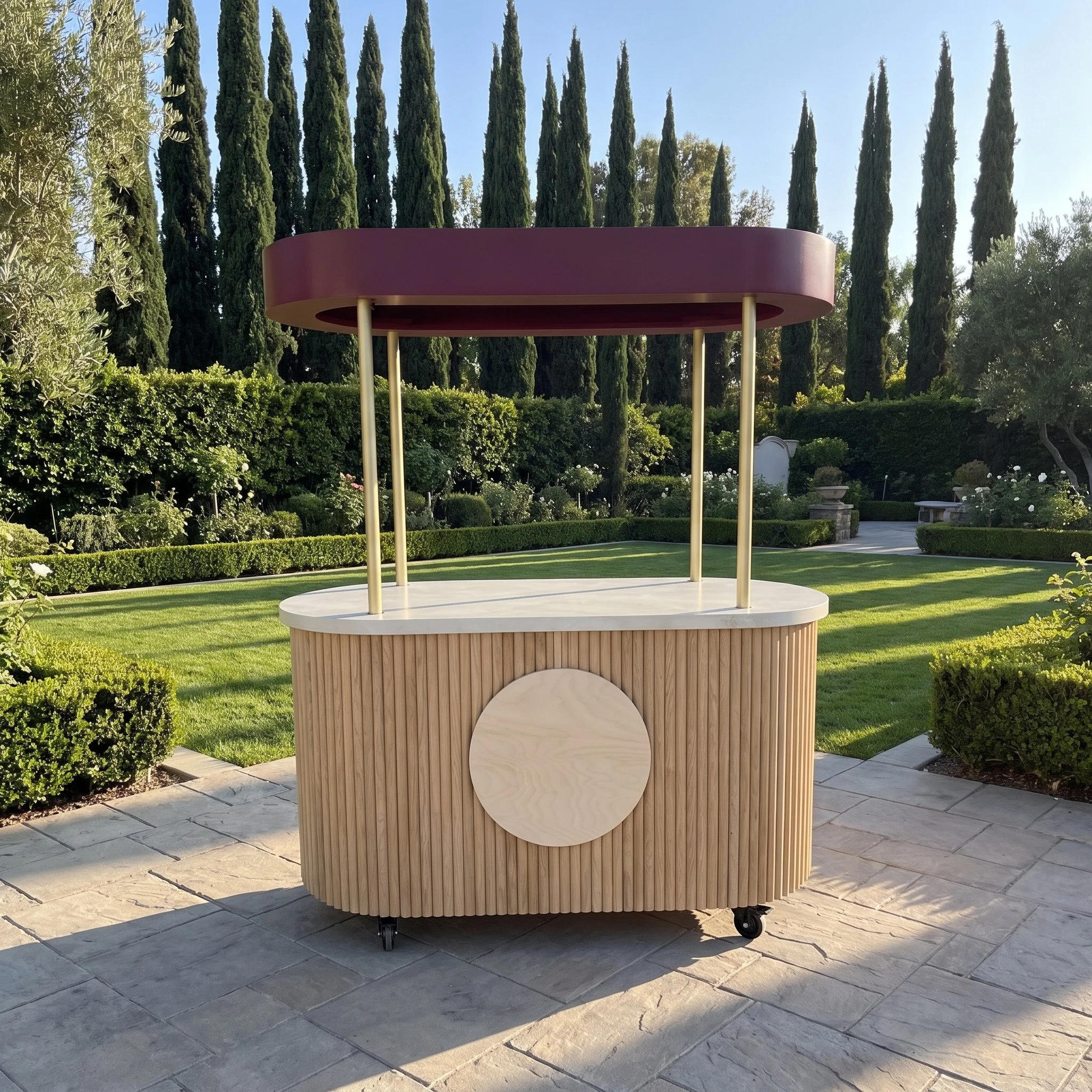
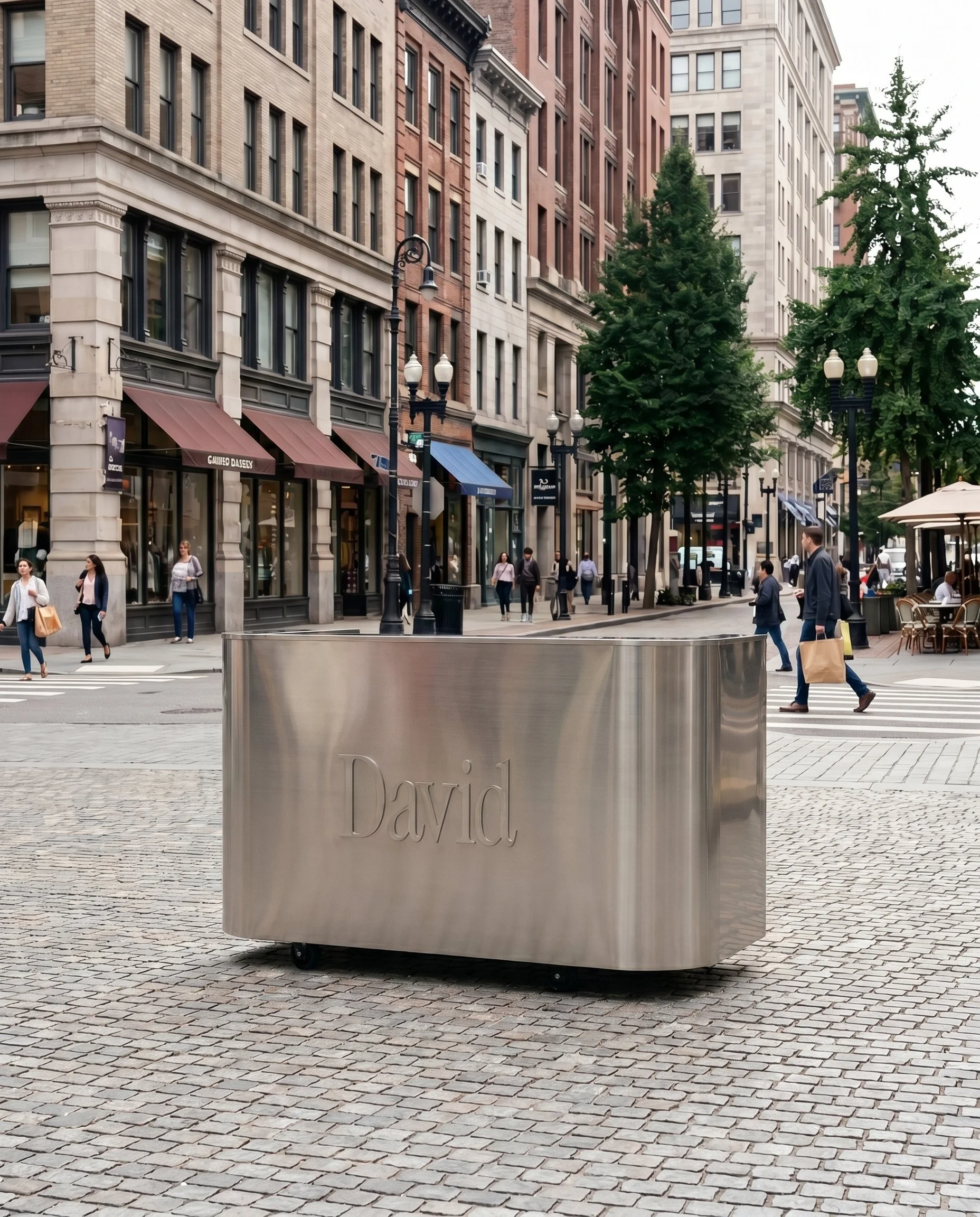
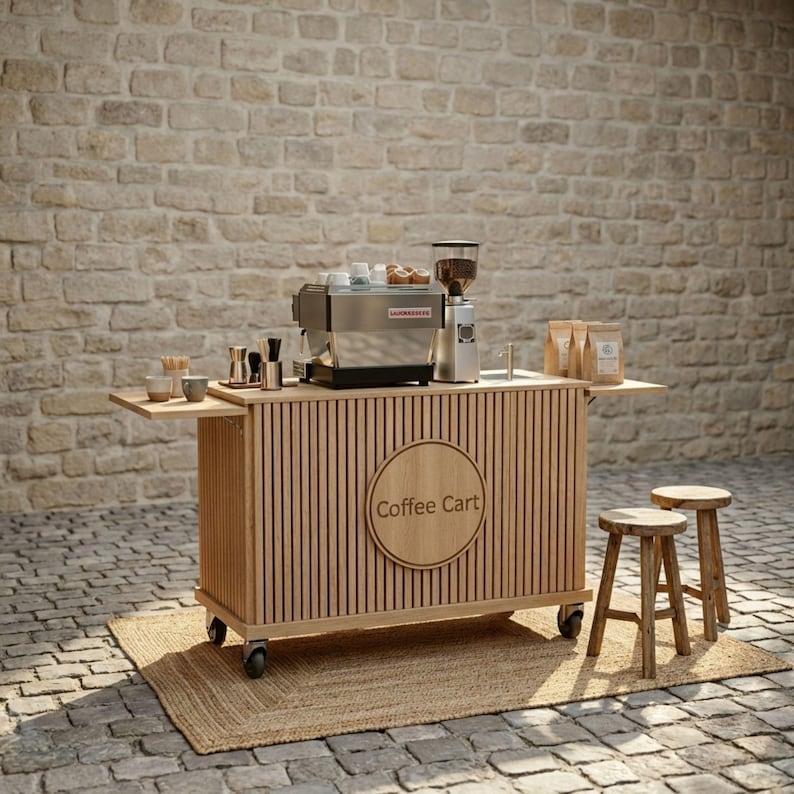
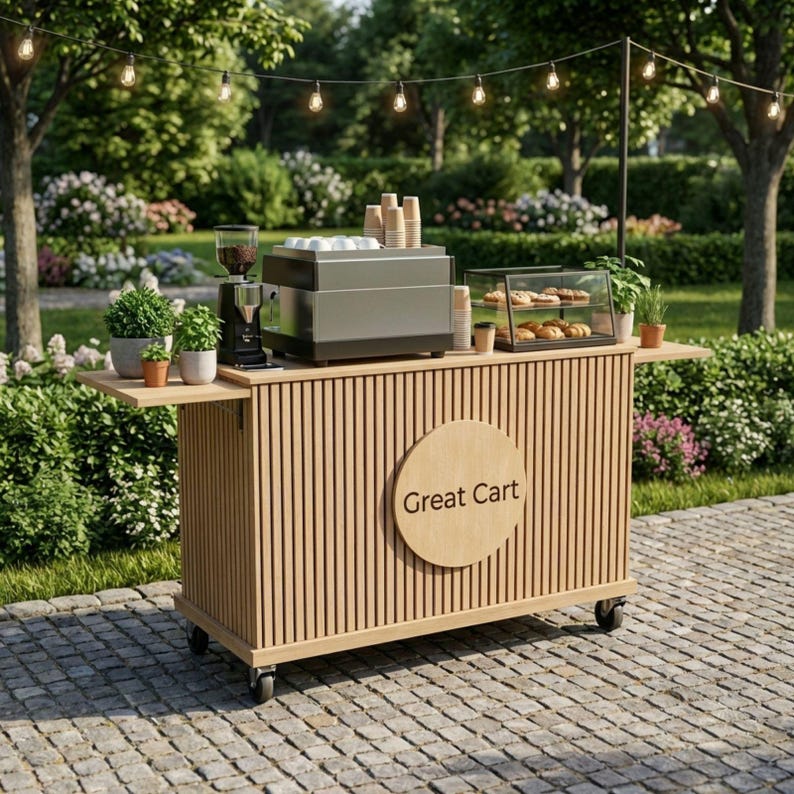
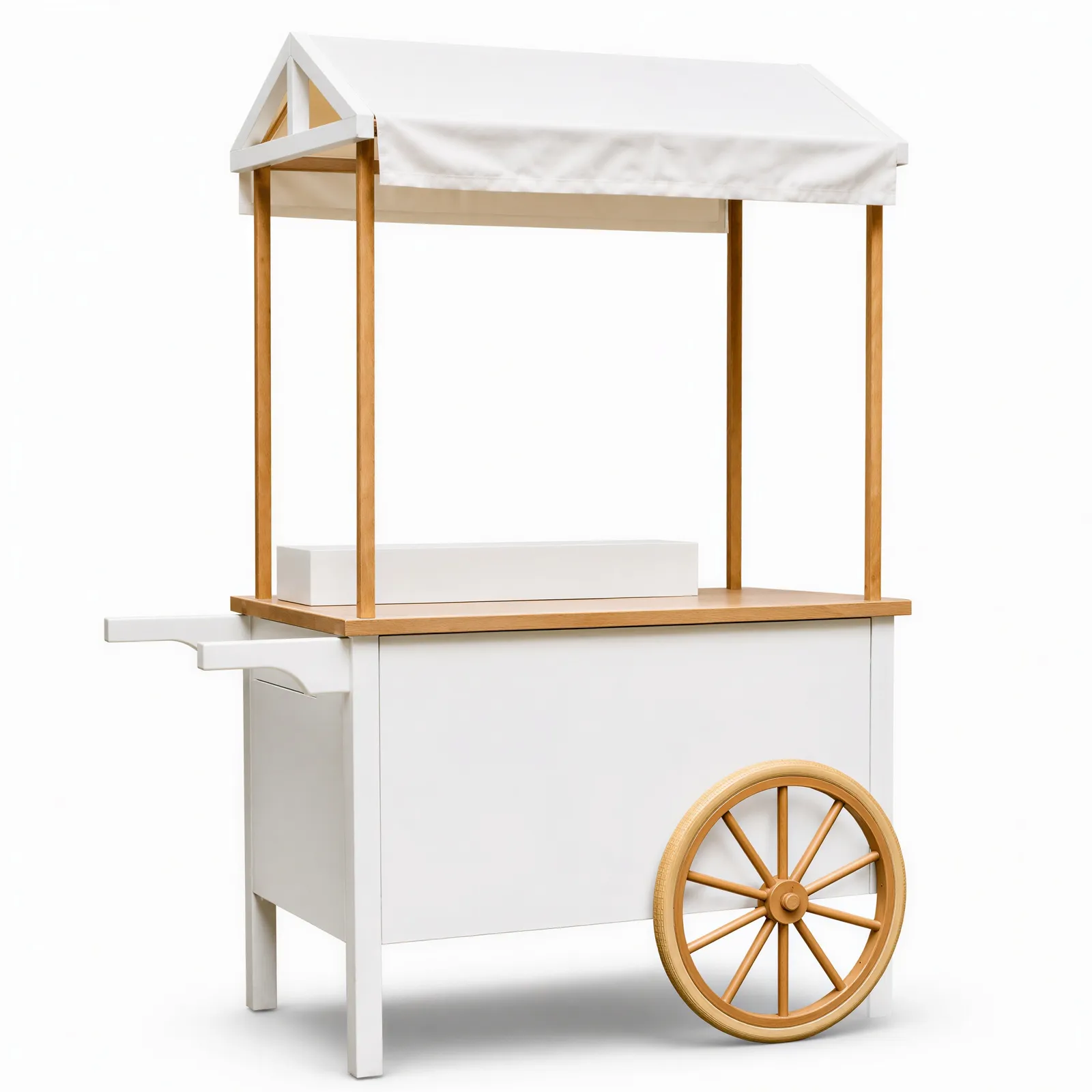
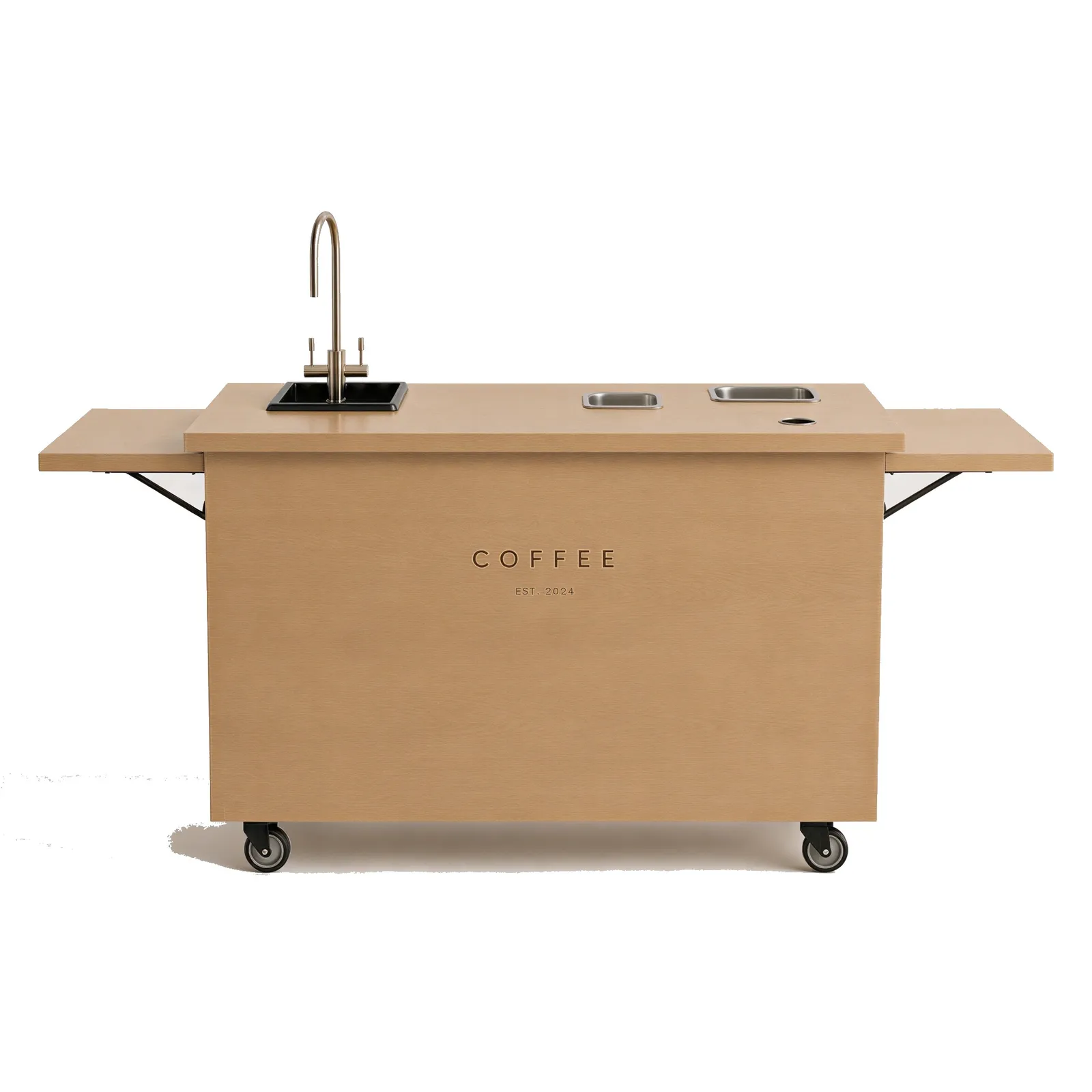
Stainless steel carts are easy to sanitize but can feel industrial, and they show every fingerprint. A solid wood coffee cart brings warmth that suits weddings, boutique hotels and corporate lobbies, which is why many brands choose wood for the customer-facing side of the cart.
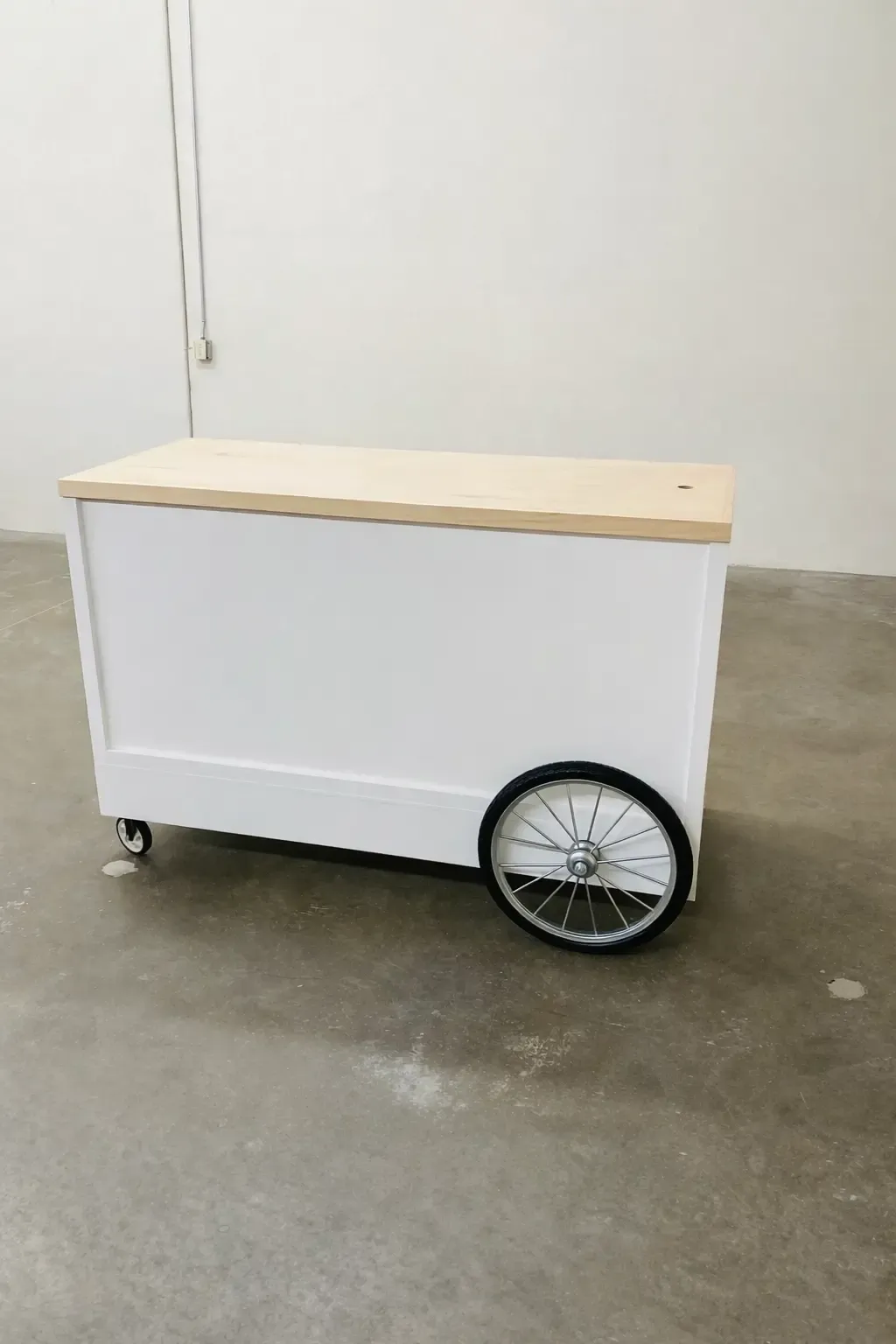
We build frames from kiln-dried hardwood and furniture-grade panels, then seal every surface with a durable, food-safe finish. Prep surfaces can be specified in sealed hardwood, laminate or a stainless insert where you want a fully wipeable zone around the machine and drip area.
The best result is usually a mix: wood for structure and branding, wipeable surfaces where water and milk land. Tell us how you work and we will place each material where it makes sense.
Fitting your espresso machine, grinder and water system
We do not sell espresso machines or appliances, so every cart is planned around the gear you bring. Send us the make and model of your machine and grinder and we will size the counter, add cable pass-throughs and allow for the heat and airflow your machine needs.
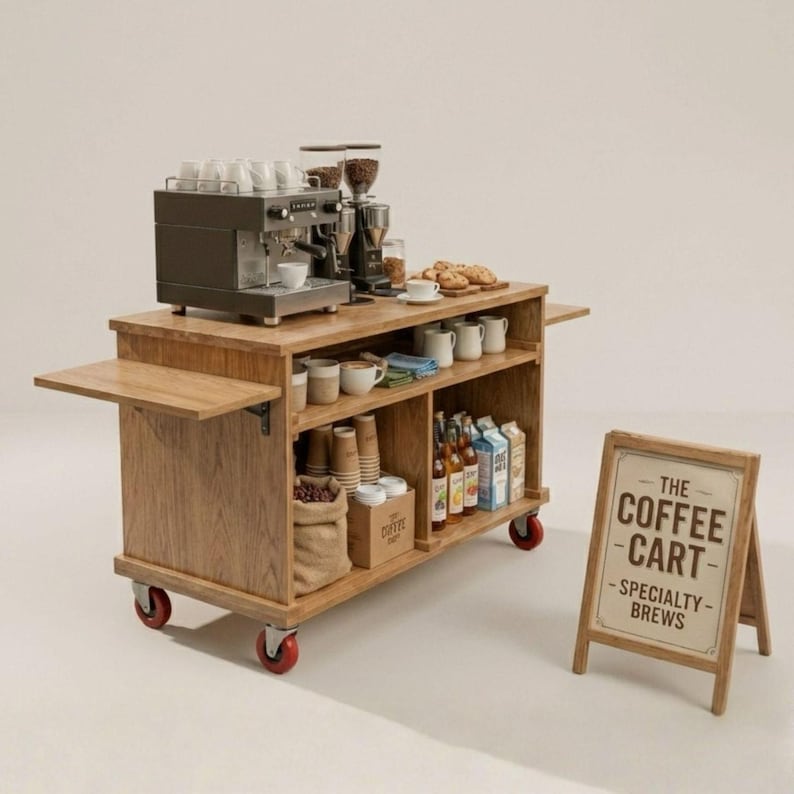
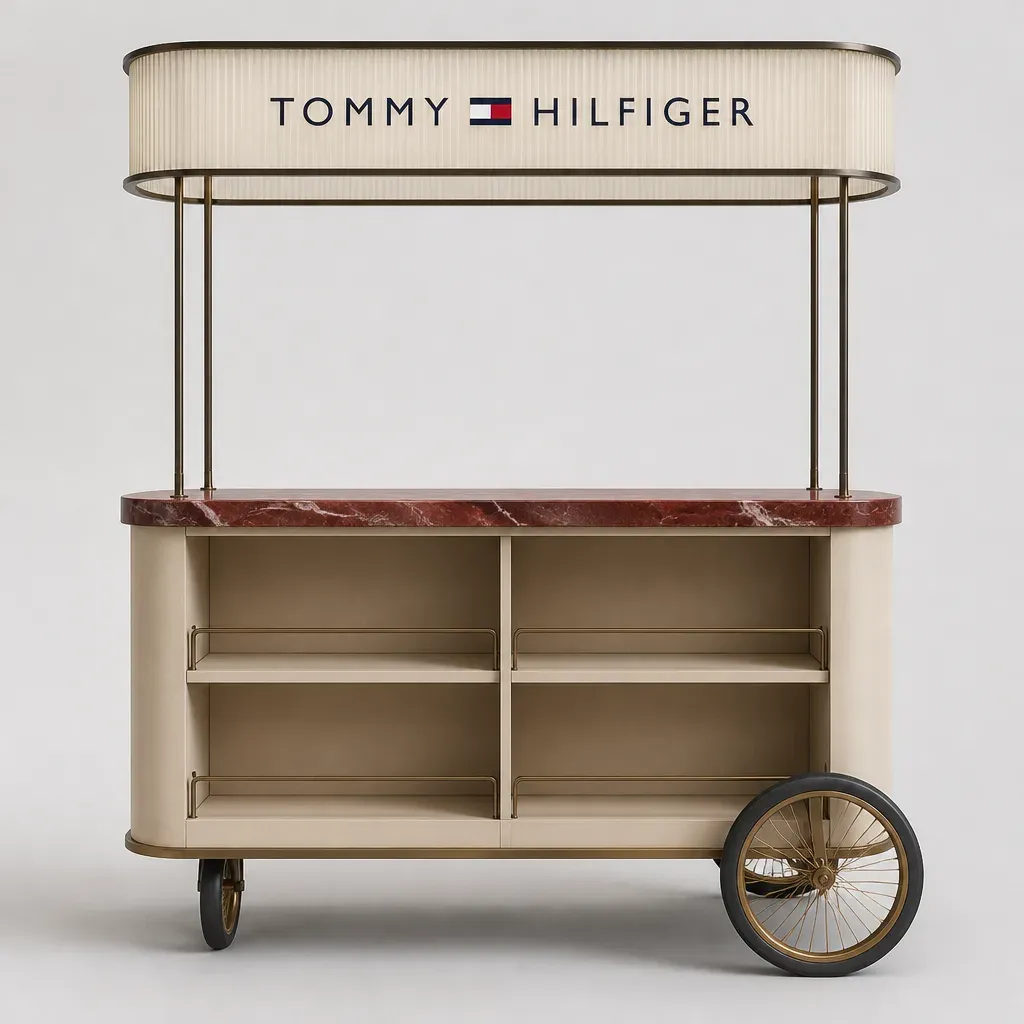
Lower cabinets typically hold fresh and grey water containers, a pump if your machine needs pressurized water, and storage for cups, lids and syrups. Ask about pull-out shelves for water jugs, since lifting full containers from a fixed shelf gets old quickly.
If you plan to run on a generator or venue power, confirm your machine's amperage before the event. Many commercial espresso machines need a dedicated circuit, so plan power with the venue in advance.
Health code considerations for a mobile espresso cart
Rules vary by city and county. Many US health departments require a handwashing sink with hot water for open food or drink prep, plus separate fresh and wastewater tanks sized for your service. Some areas also require a commissary agreement for cleaning and restocking.
Before you finalize a design, call your local health department and ask for their mobile food unit plan review checklist. Share it with us and we can lay out sinks, tank compartments and splash zones to match. Always confirm final approval locally, since inspectors have the last word.
Custom branding, finishes and shipping
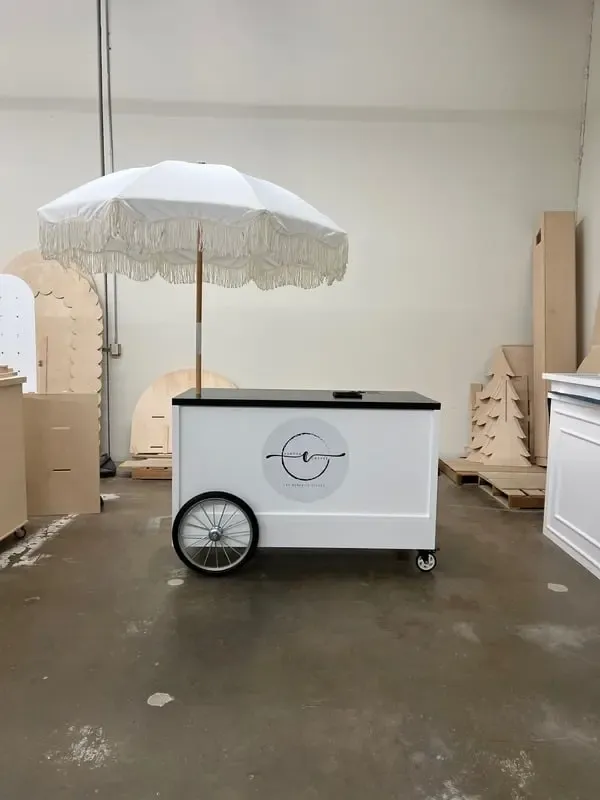
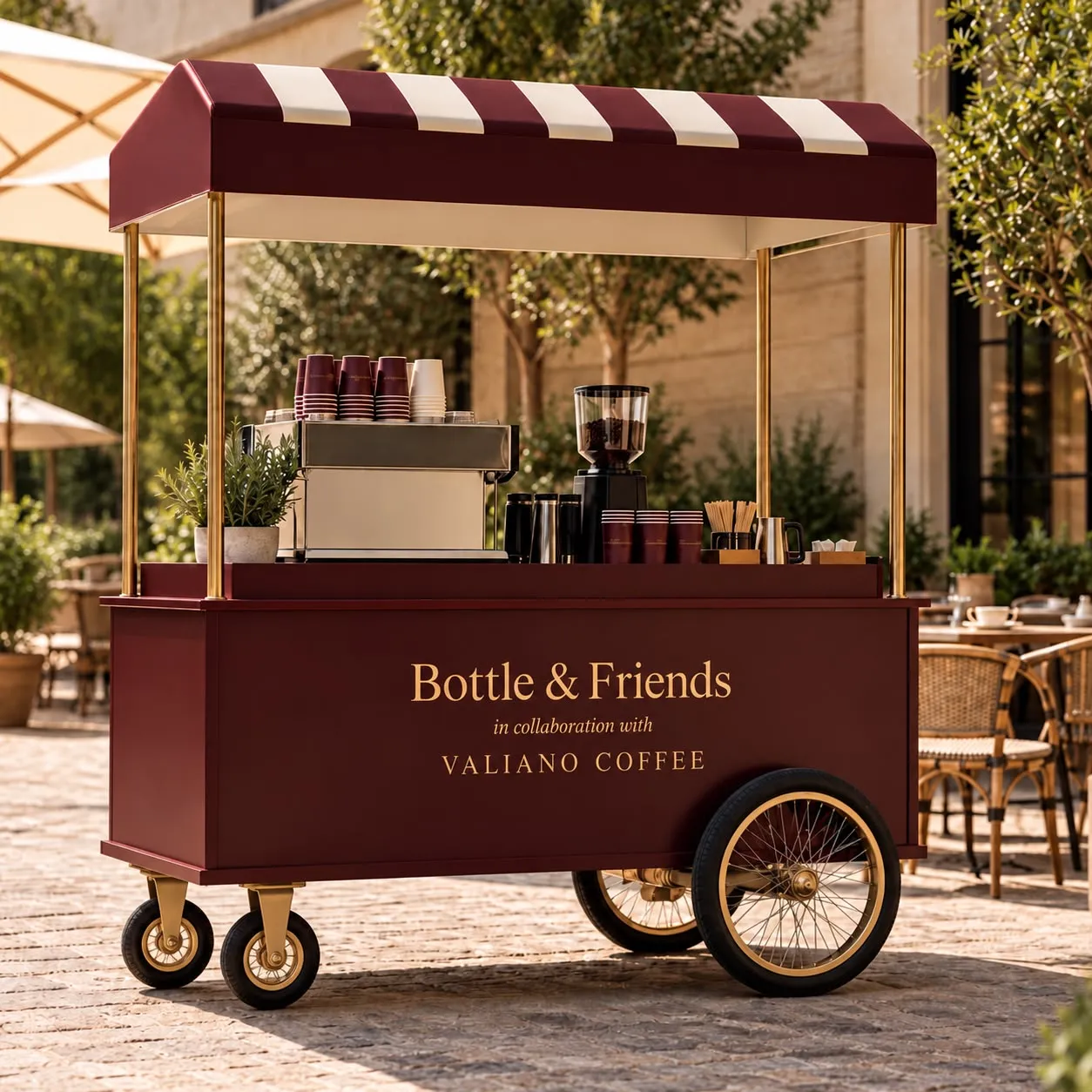
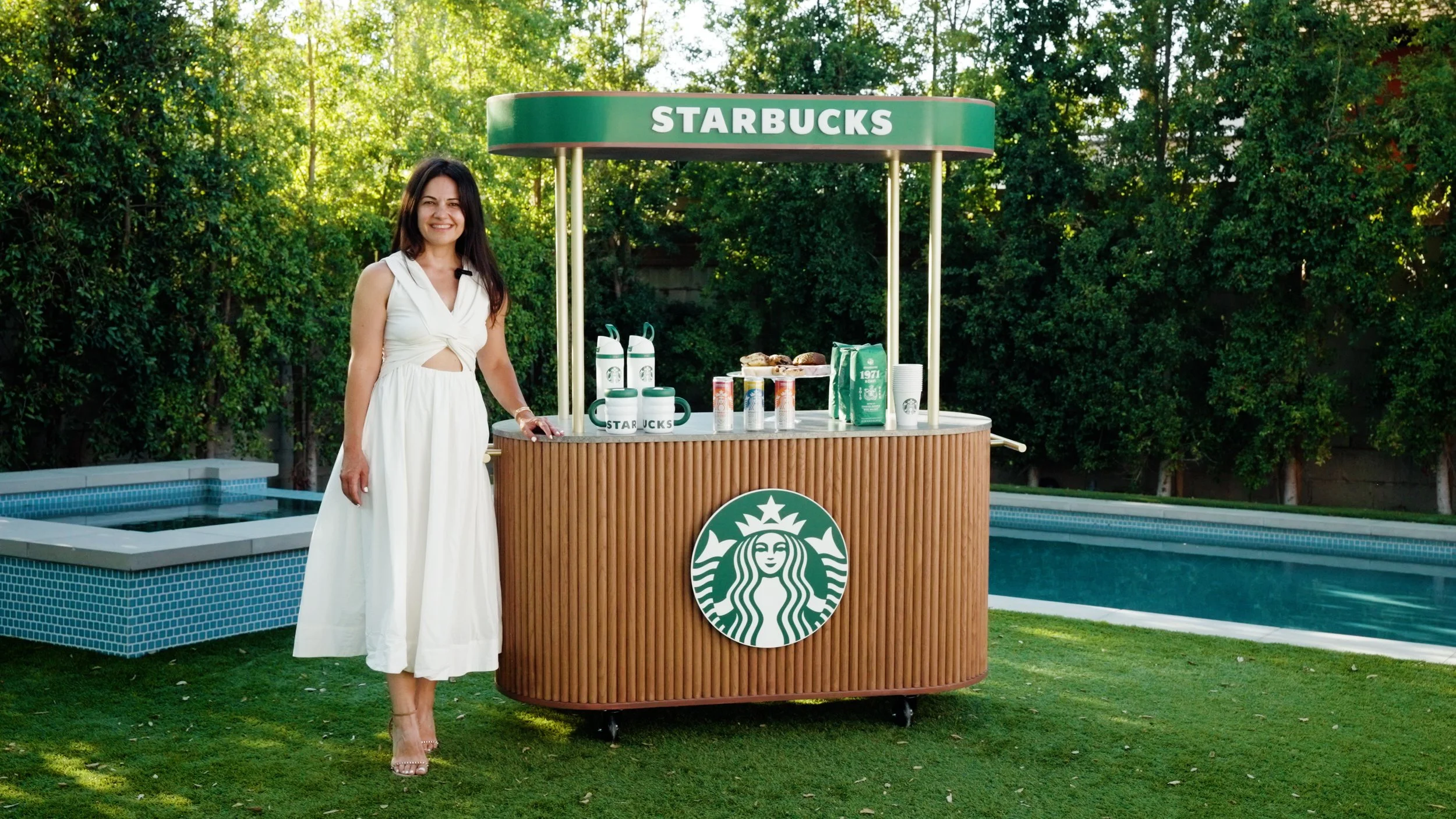
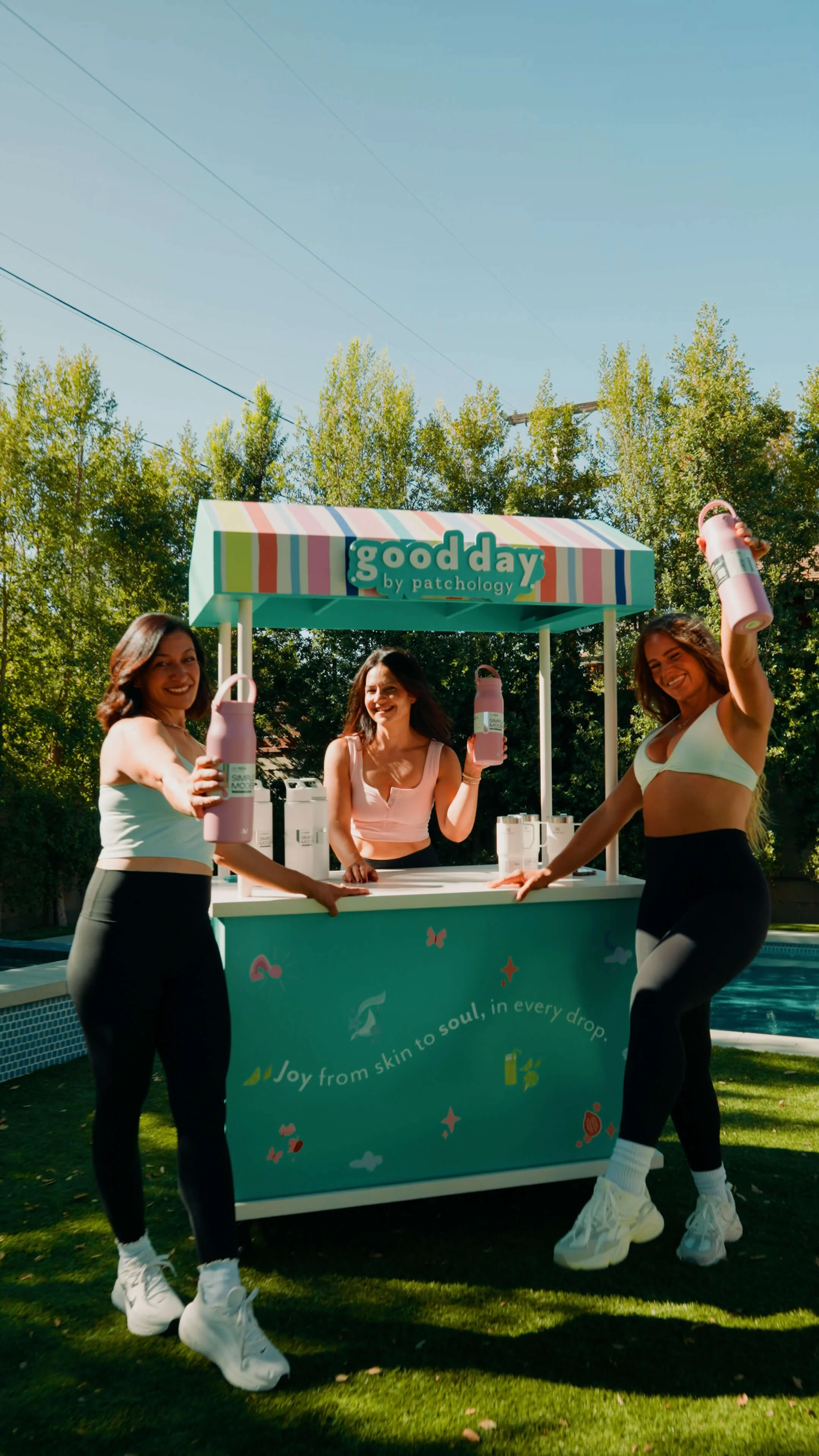
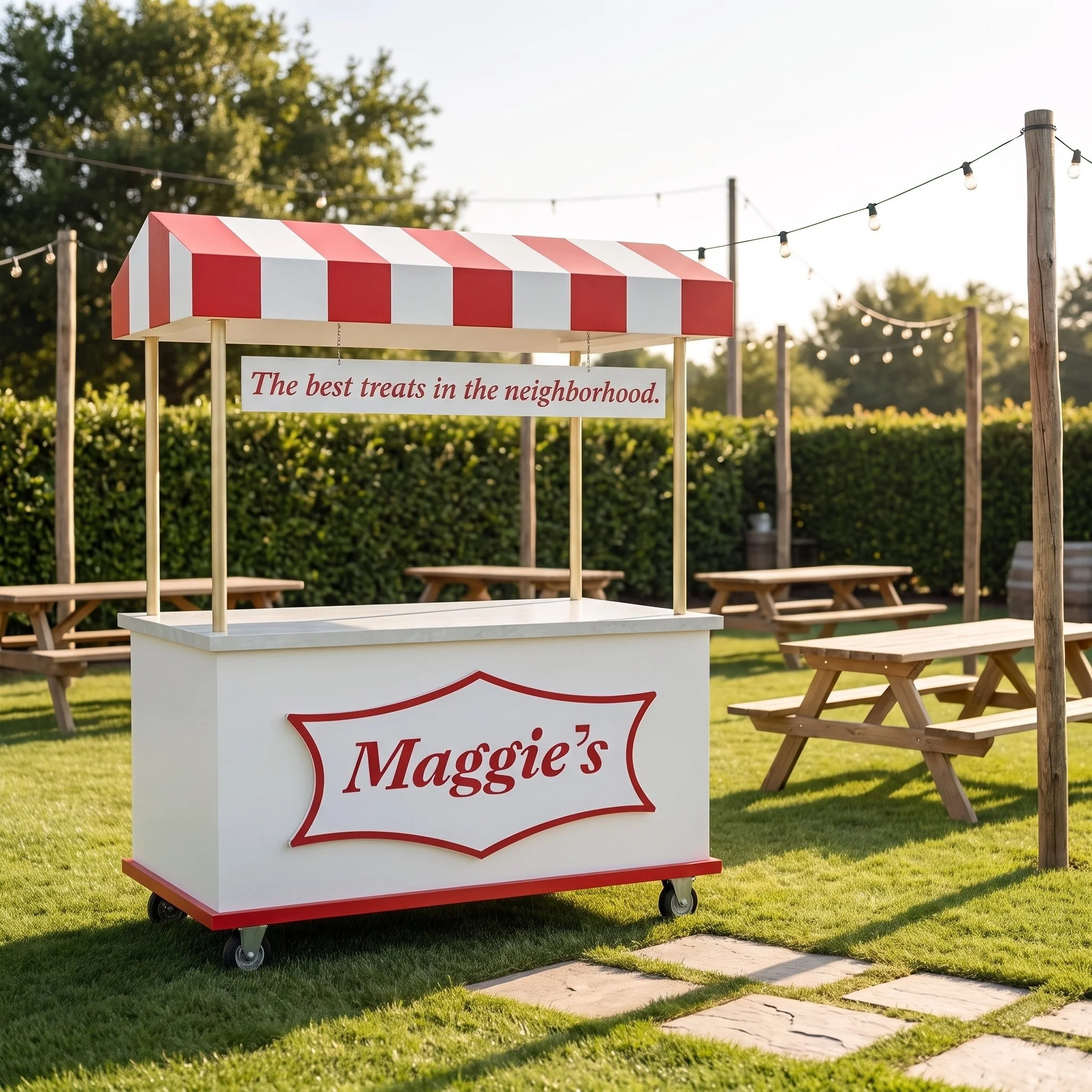
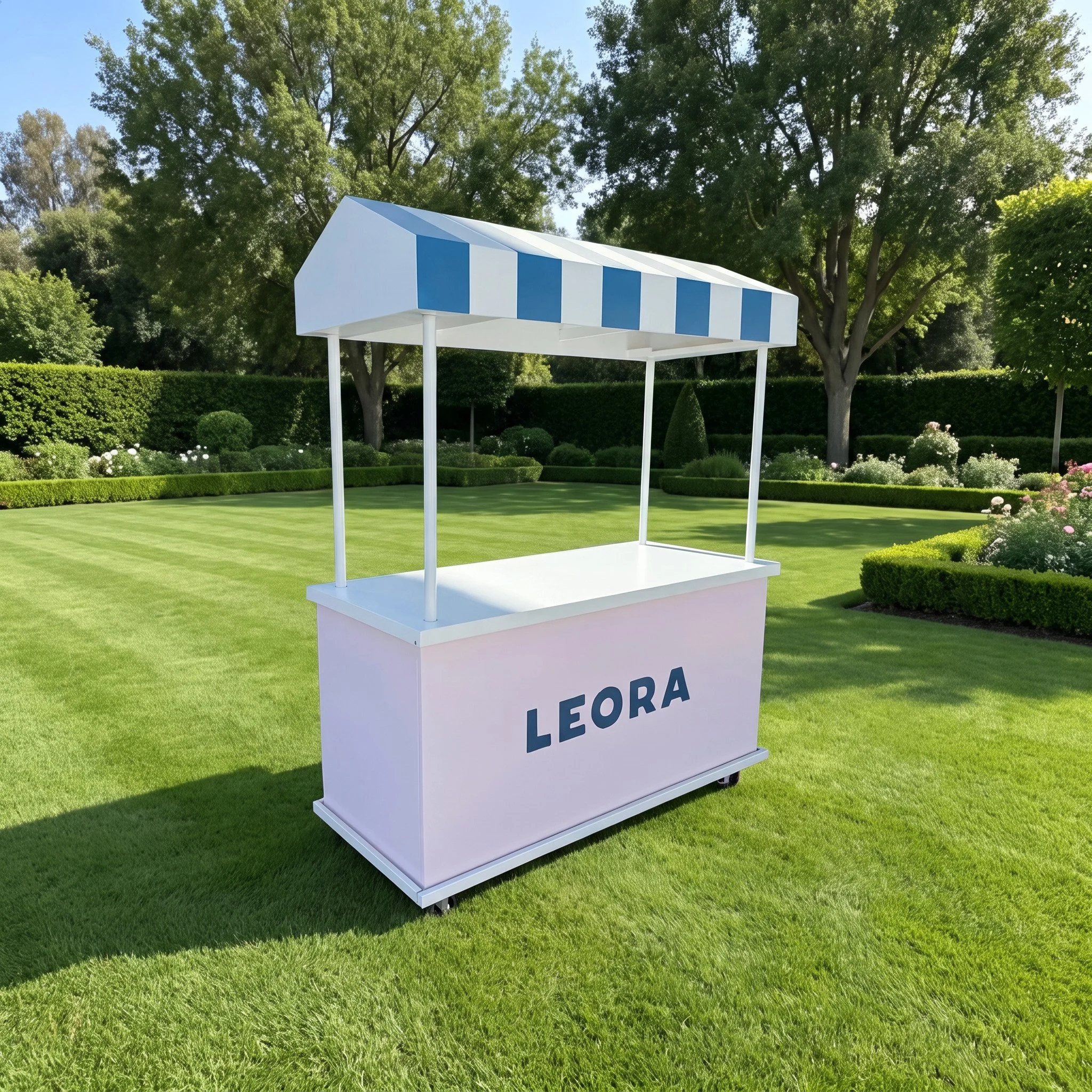
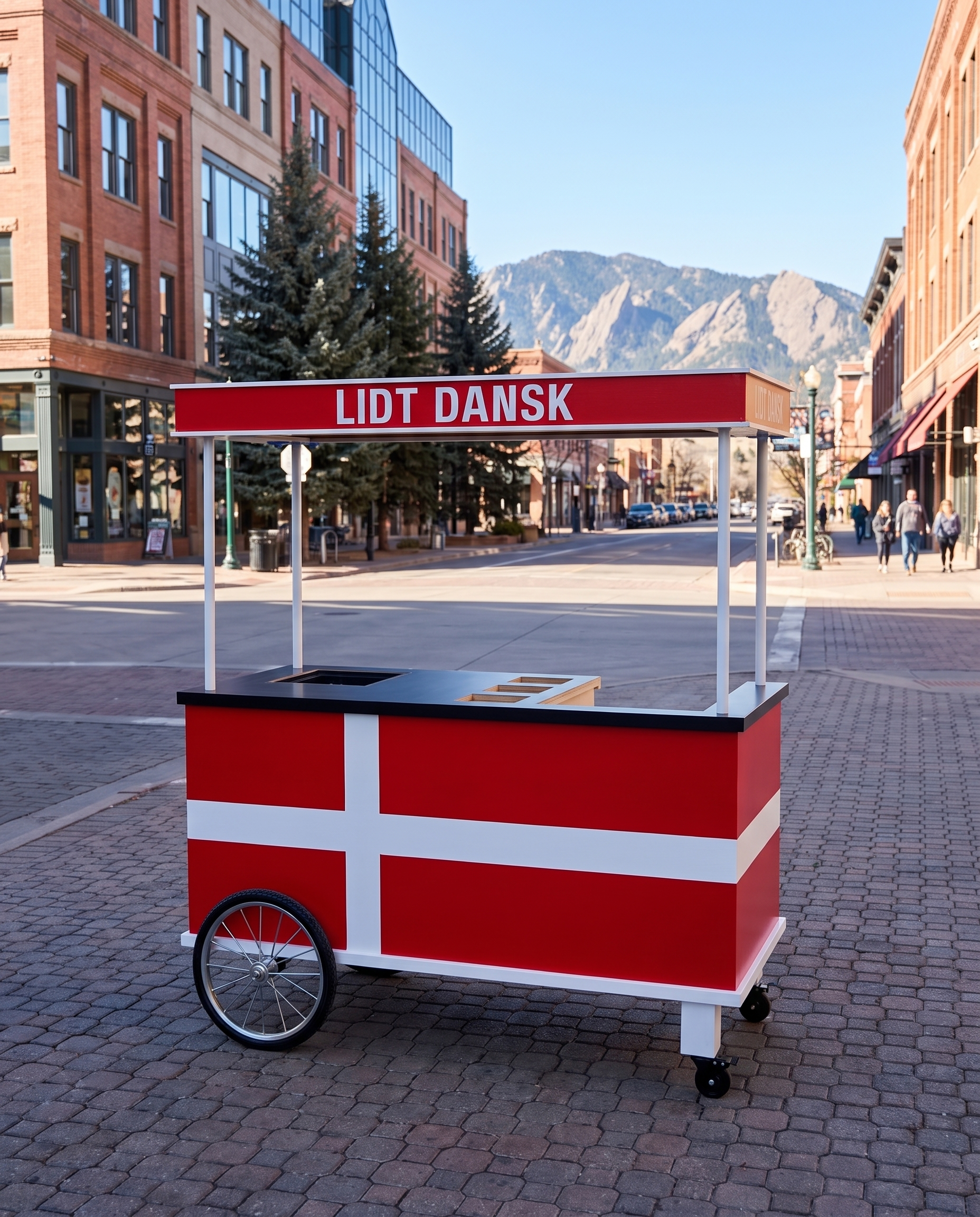
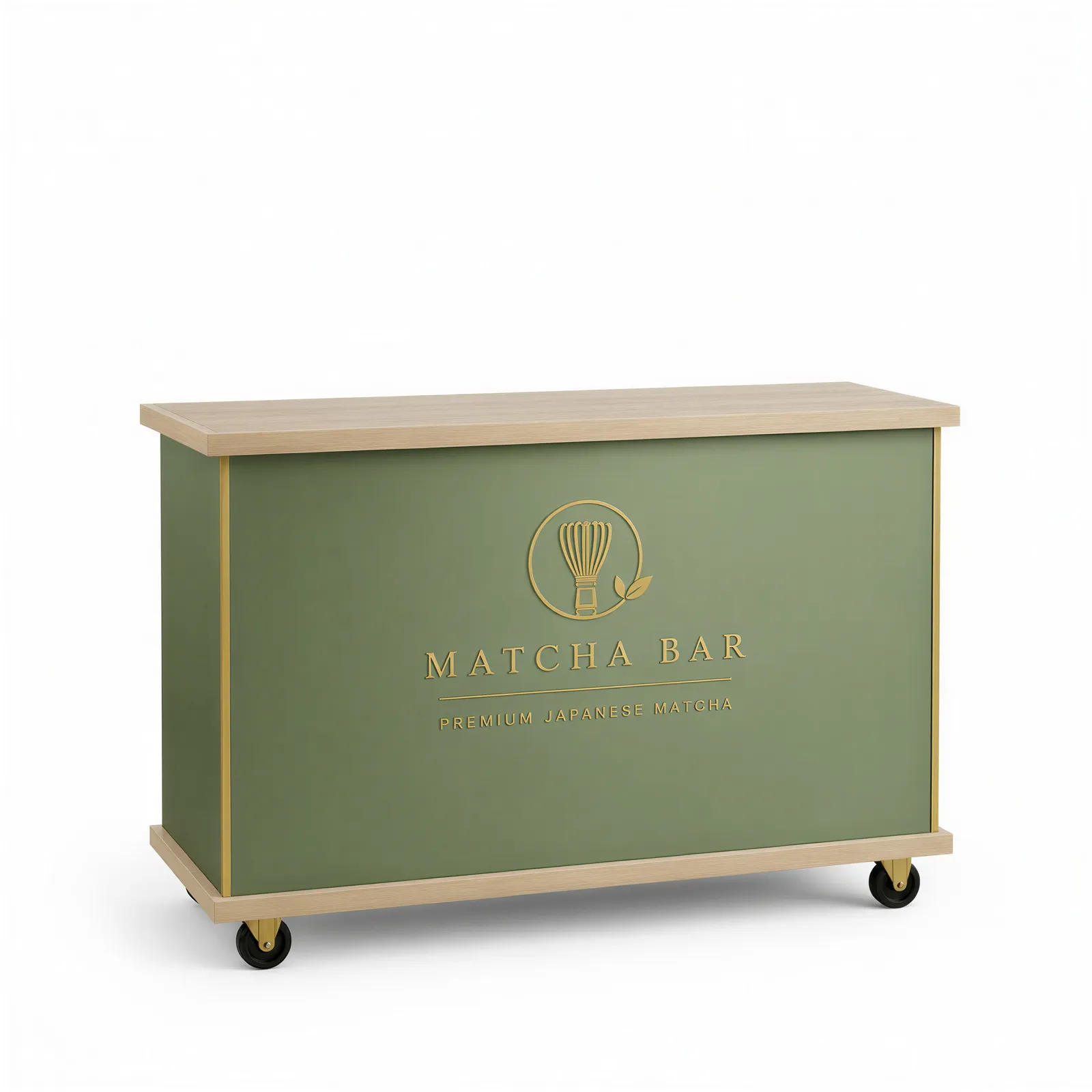
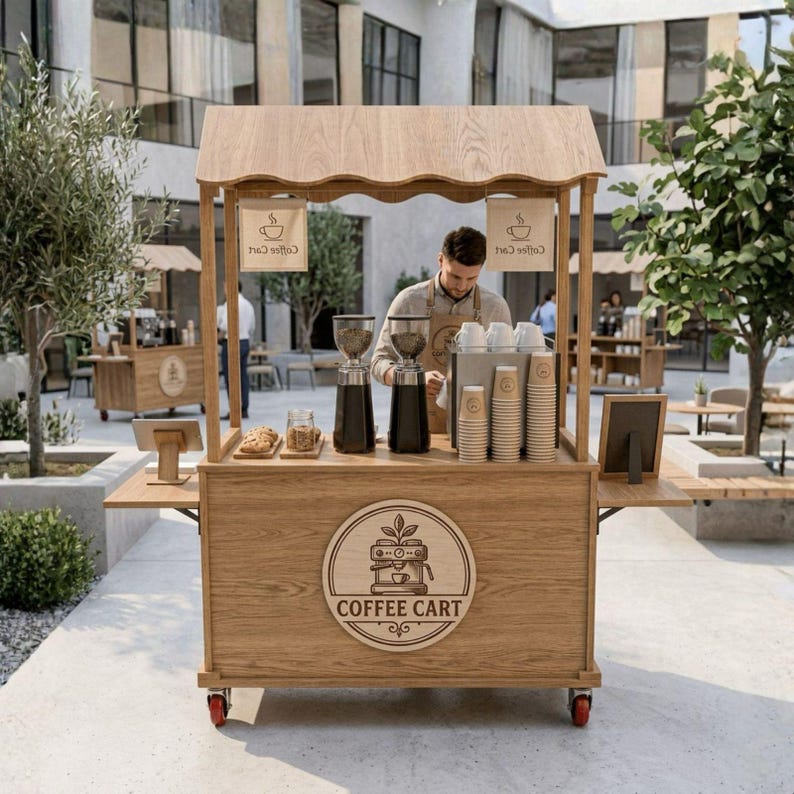
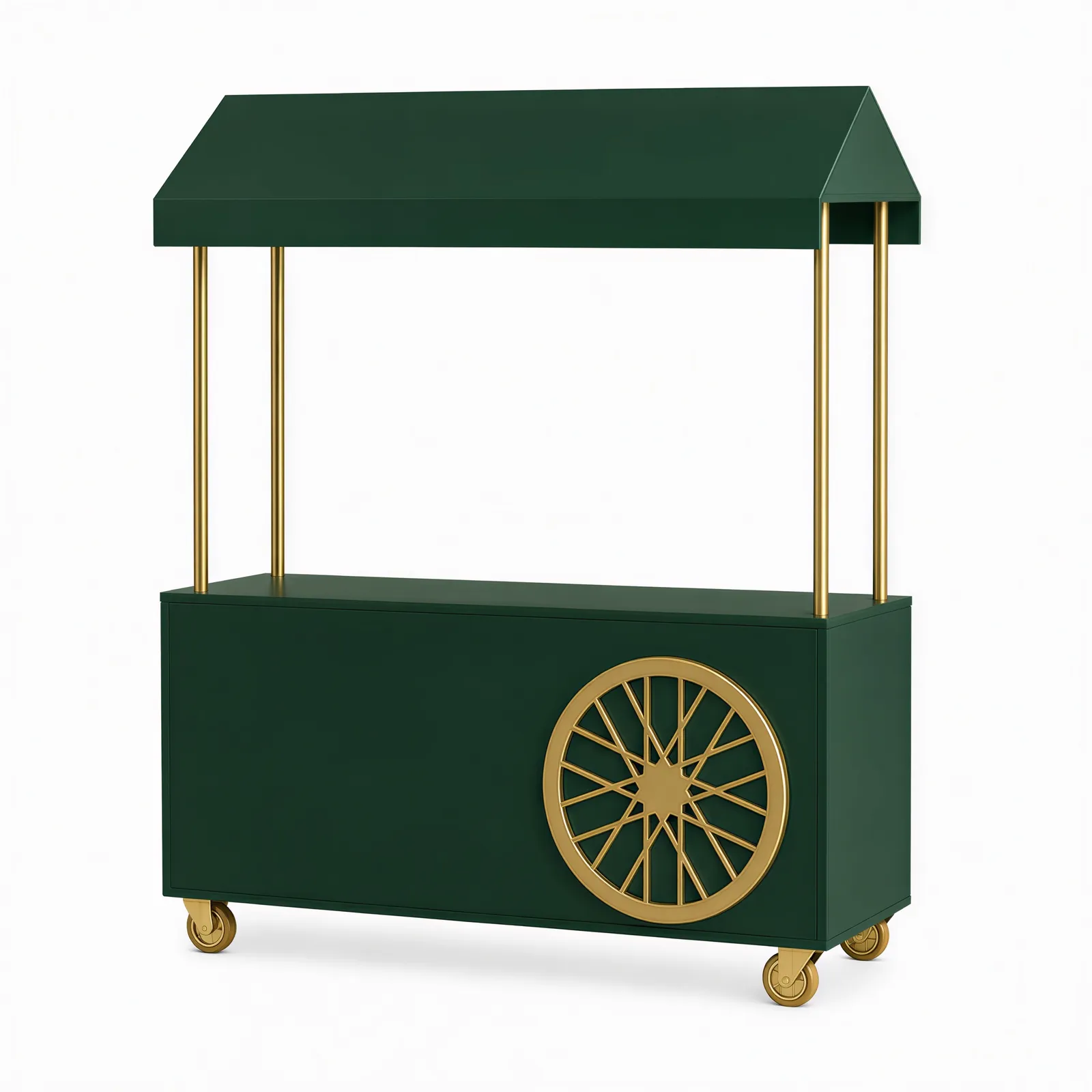
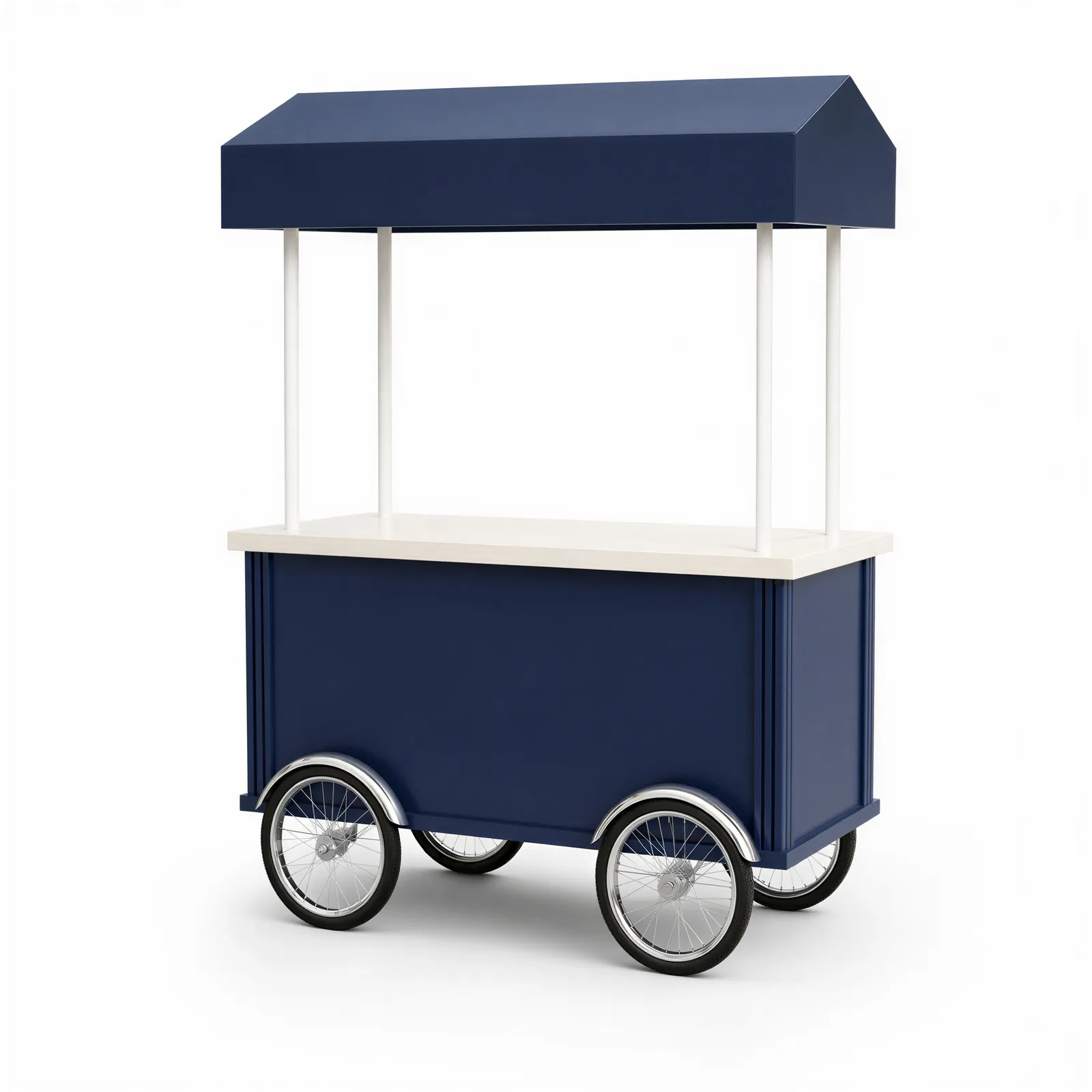
Your coffee cart is often the first thing guests see, so branding matters. We offer custom paint and stain colors, CNC laser-engraved logos on front panels and menu boards, and options like canopies, chalkboard fronts and display shelves.
Most custom builds leave the workshop within 5 to 7 business days of design approval. Each cart ships fully assembled in an ISPM-15 wooden crate with insured freight, so there is no flat-pack assembly on arrival. Unpack it, roll it into place and connect your equipment.