
Hot Dog Food Cart Models:
Hot Dog Cart for Sale
Commercial-grade mobile hot dog food carts for sale. Handcrafted with NSF-304 food-grade stainless steel steam wells, high-BTU propane burners, and all-weather canopy shelters for high-volume street vending, stadium concessions, and turnkey catering.
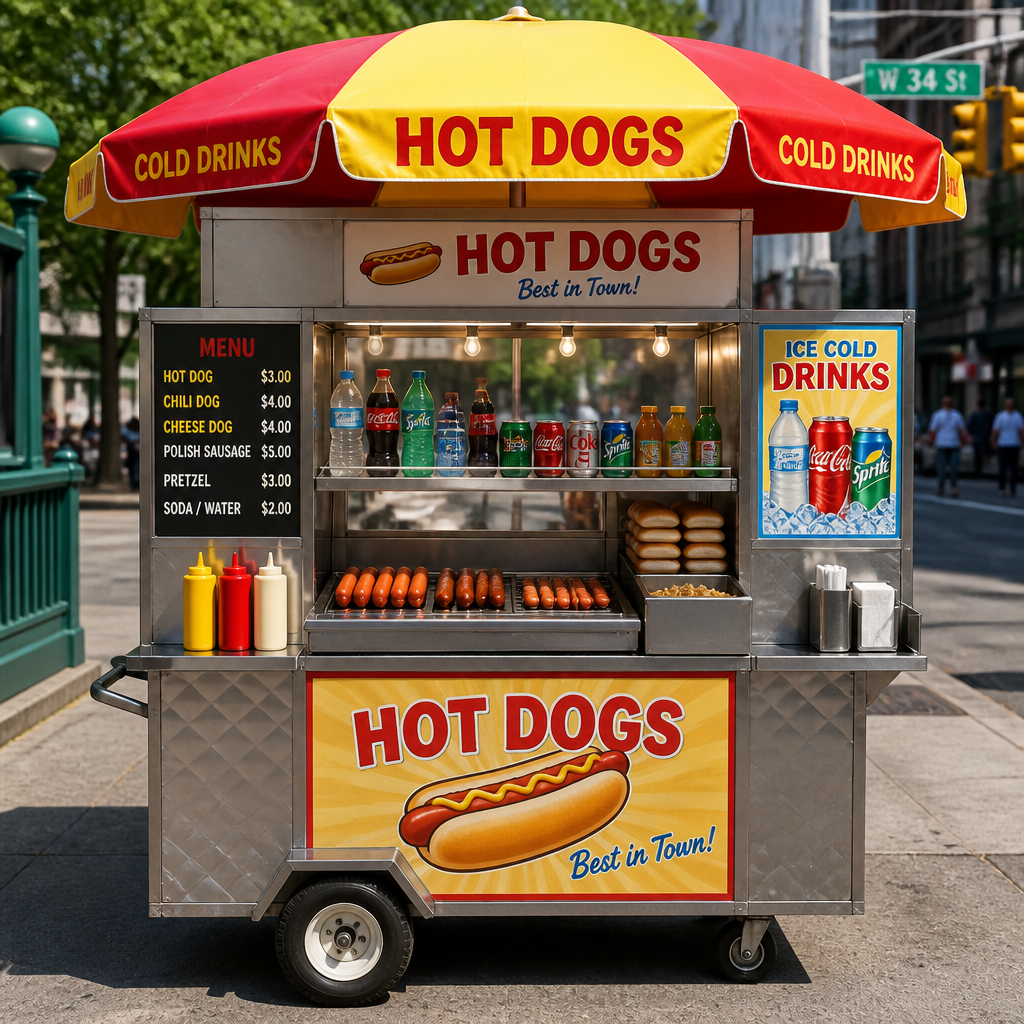
Handcrafted Hot Dog Carts for Sale
Built to commercial food service standards with insulated steamers, sneeze guards, and locking casters.
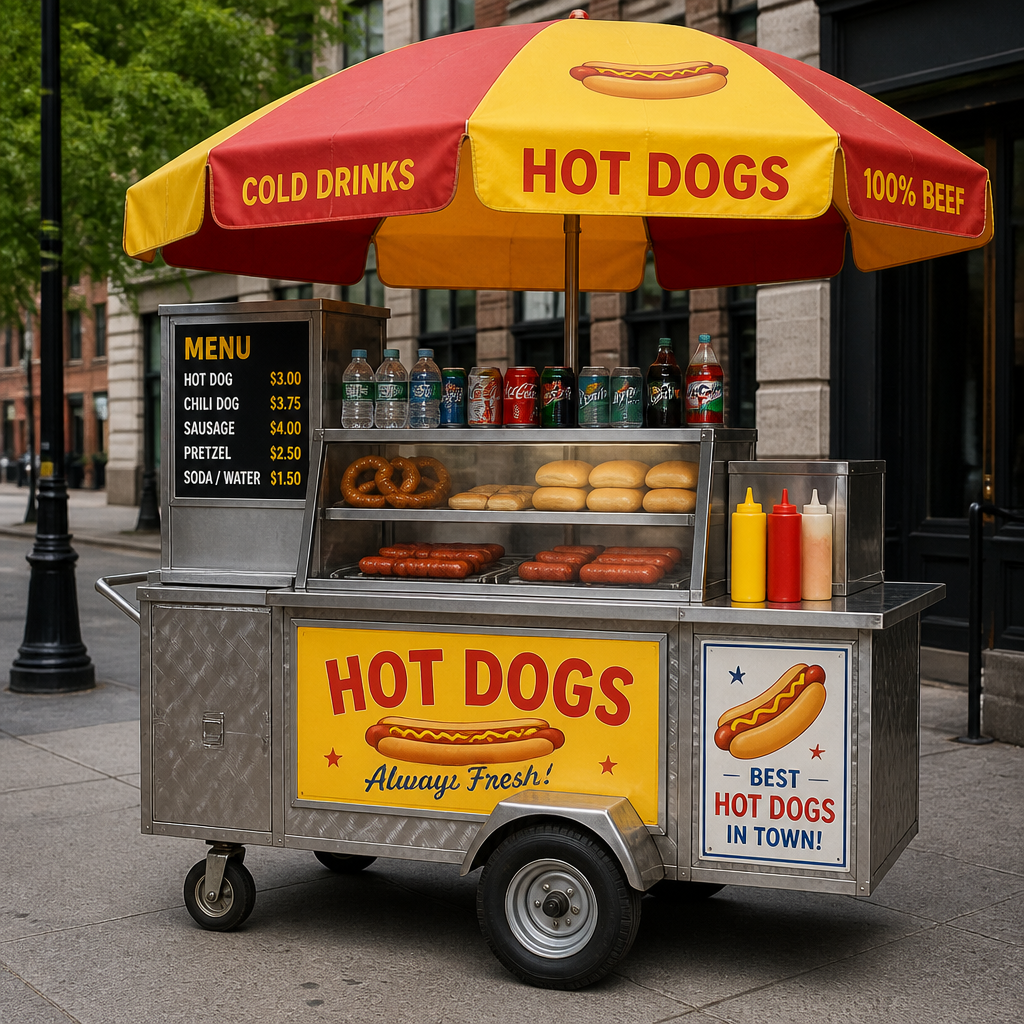
Commercial NYC Stainless Steel Hot Dog Cart
$3450
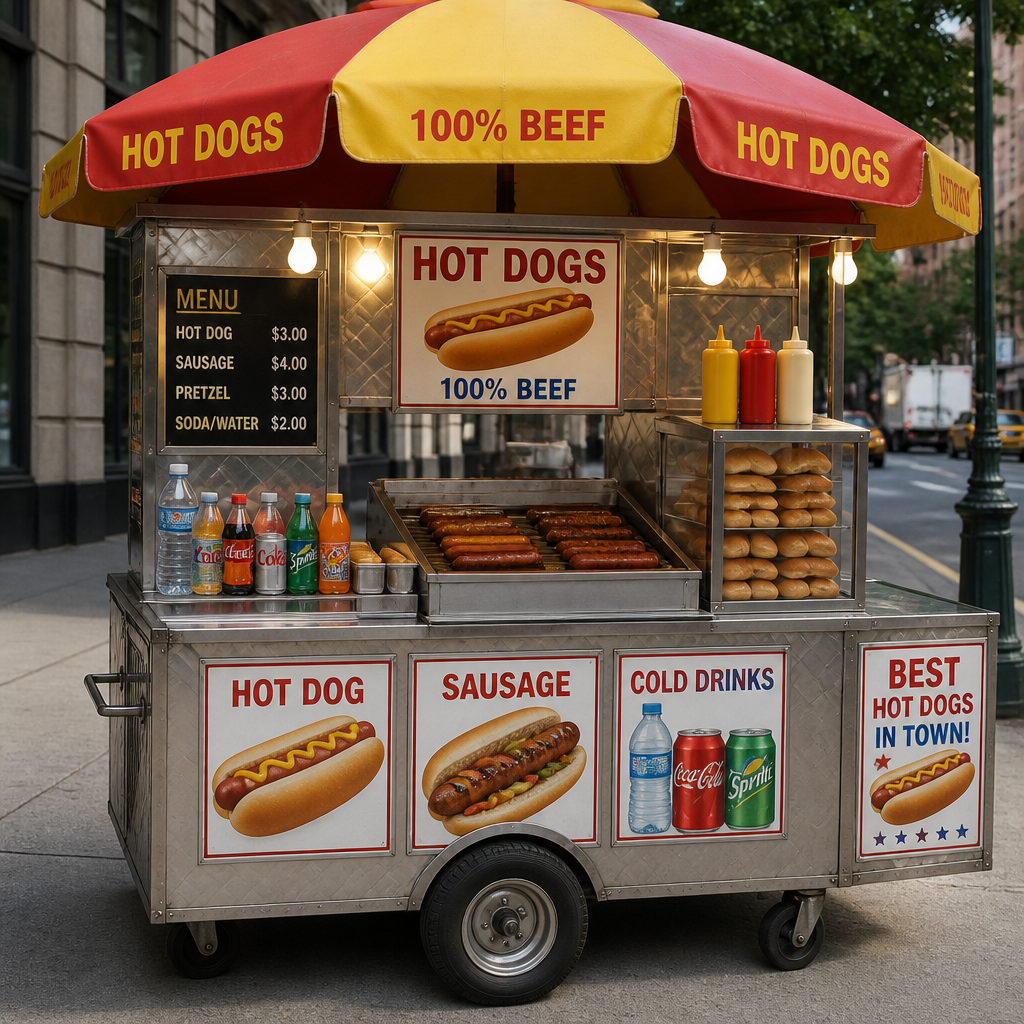
Broadway Mobile Street Vending Hot Dog Cart
$3850
Midtown Express Commercial Hot Dog Vending Cart
$4150
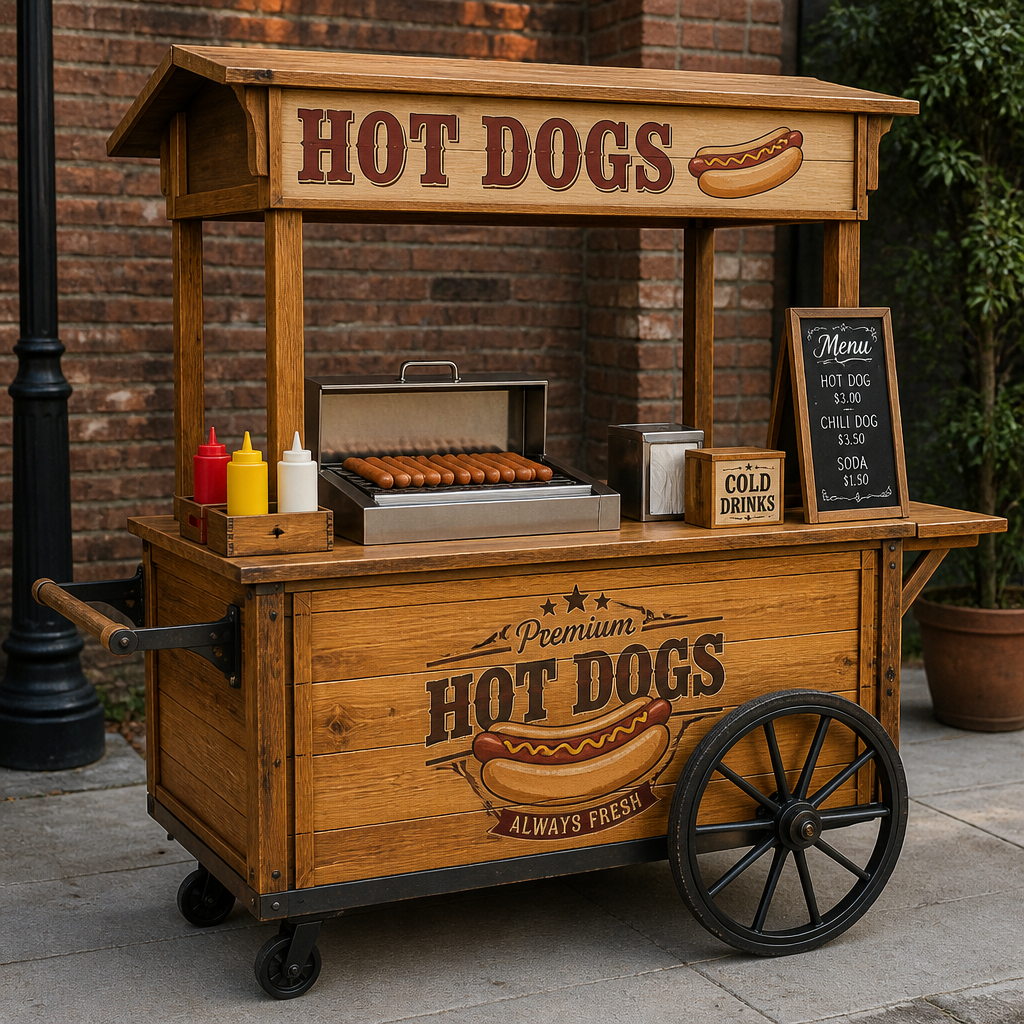
Vintage Handcrafted Wooden Hot Dog Cart
$2650
How to Build a Hot Dog Cart: Step-by-Step DIY Engineering
Planning a do it yourself hot dog cart build? Fabricating your own cart provides custom design control, but requires professional TIG welding, certified LP-gas safety testing, and strict compliance with local health department plumbing regulations.
Structural Chassis & Mobility
Weld a heavy-gauge square steel tube chassis treated with anti-rust epoxy primer. Fit with 8-inch pneumatic locking swivel casters for street navigation or mount onto a DOT-approved towable highway trailer axle.
304 Food-Grade Countertops
Cut and bend 18-gauge 304 NSF stainless steel sheets with rolled safety edges. Cut precision drops for standard full-size 1/1 steam table warming pans, roller grills, and insulated 1/3-size condiment wells.
Cast-Iron Propane Burners
Mount dual high-output cast iron star burners under the steam table. Run solid copper LP distribution lines with brass control valves, low-pressure regulators, and safety flame-out thermocouple shutoffs.
NSF 4-Sink Plumbing Array
Plumb a 3-compartment dishwashing sink plus an independent handwashing basin. Connect an automatic on-demand 12V water pump, instant LP water heater, 5-gallon fresh tank, and 7.5-gallon greywater tank.
Health Permit Advisory for DIY Builders
Before building a hot dog cart, submit your plumbing blueprints and burner specs to your county health department. Over 45% of self-built carts fail their initial permit inspection due to improper sink basin dimensions or non-certified valves.
Used Hot Dog Carts for Sale vs. Factory-Direct Commercial Units
Should you buy a used hot dog cart on marketplace classifieds or invest in a factory-built commercial food cart? Compare risks, compliance guarantees, and total startup costs.
Used Hot Dog Carts for Sale
Purchasing a used hot dog cart appears economical at first glance, but pre-owned units frequently hide expensive regulatory and mechanical liabilities that delay your opening date:
- Health Code Re-inspection Failures: Municipal plumbing codes evolve constantly. Older used carts often feature inadequate sink water capacity or non-certified drain separation.
- Corroded Gas & Water Hardware: Worn star burners, cracked LP lines, and calcified water heaters commonly require $500–$1,200 in retroactive repair work.
- No Manufacturer Warranty: Private secondhand purchases are strictly "as-is", leaving you on the hook for mechanical downtime during peak weekend crowds.
Buy a Hot Dog Cart Factory Direct
Buying brand-new commercial hot dog food carts for sale guarantees your equipment arrives turnkey, street-legal, and pre-engineered to satisfy every city food inspector:
- 100% Health Department Pass Guarantee: Every unit is manufactured with NSF-grade 304 stainless steel, compliant 4-sink basins, and safety-certified propane valves.
- Ready to Vend Day One: Delivered fully assembled in reinforced wooden freight crates. Fill the water tanks, hook up propane, and start selling immediately.
- Full Warranty & Blueprint Package: Receive complete CAD technical schematics for your health permit application plus dedicated master cartwright support.
How Much is a Hot Dog Cart? Comprehensive Cost Comparison
Clear breakdown of total capital investment, lead time, and health inspection pass rate across all options.
| Evaluation Criteria | Do It Yourself (DIY Build) | Used Hot Dog Carts | Turnkey Commercial Direct |
|---|---|---|---|
| Upfront Equipment Cost | $800 – $1,800 (Raw Materials) | $1,500 – $2,800 (+ repairs) | $2,650 – $4,150 (Complete) |
| Time to First Vending Day | 4 to 8 Weeks Fabrication | 2 to 4 Weeks Refurbishment | Ready Day One |
| Health Permit Pass Rate | ~45% on First Submission | ~55% (Often requires rework) | 100% Guaranteed Compliance |
| Food-Contact Stainless Grade | Self-cut 304 or 430 Stainless | Aged, scratched, or pitted | Virgin Mirror-Polished 304 NSF |
| Plumbing & Sinks | Custom self-plumbed | Varies (Often 2 or 3 sinks) | 4-Bay NSF Array + 12V On-Demand |
| Warranty & Schematics | None (Self-maintained) | None (Sold As-Is) | Full Warranty + Permit CAD Pack |
How to Start a Hot Dog Cart Business & How Much Does a Hot Dog Cart Make?
Wondering how do I start a hot dog cart business and how much do hot dog carts make daily? With low startup overhead, hot dog cart food operations average 75–85% gross margins—making mobile vending one of the fastest paths to profitable small business ownership.
How to Start a Hot Dog Cart Business in 4 Steps:
High-Revenue Vending Hotspots
- Transit Hubs & Metro Stops: Steady foot traffic for morning bagels and midday hot dogs cart runs.
- Downtown Nightlife Districts: Premium pricing between 11 PM and 3 AM outside entertainment venues.
- Stadium Corridors & Sports Events: Captive crowds buying quick hot dog cart food before kick-off.
- Farmers Markets & Craft Fairs: Artisanal bratwursts commanding $8.00–$10.00 specialty menu pricing.
Built around the legendary high-throughput street design of classic NYC and Chicago carts: dual steam pan capacity, bun steamers, and condiment speed rails.
Hot Dog Cart Frequently Asked Questions
If you want to buy a hot dog cart, costs vary by build quality. A brand-new commercial-grade hot dog cart for sale typically costs between $2,800 and $4,500 fully equipped with NSF-304 stainless steel steam tables, propane burners, and health-code compliant sinks. Entry-level used hot dog carts for sale generally range from $1,500 to $2,500, but often require refurbishment or plumbing upgrades. Alternatively, a do it yourself hot dog cart build using professional DIY plans usually requires $800 to $1,800 in raw materials and equipment.
Our master cartwrights provide custom CAD blueprints, NSF-compliant utility adjustments, and wholesale volume tiers.