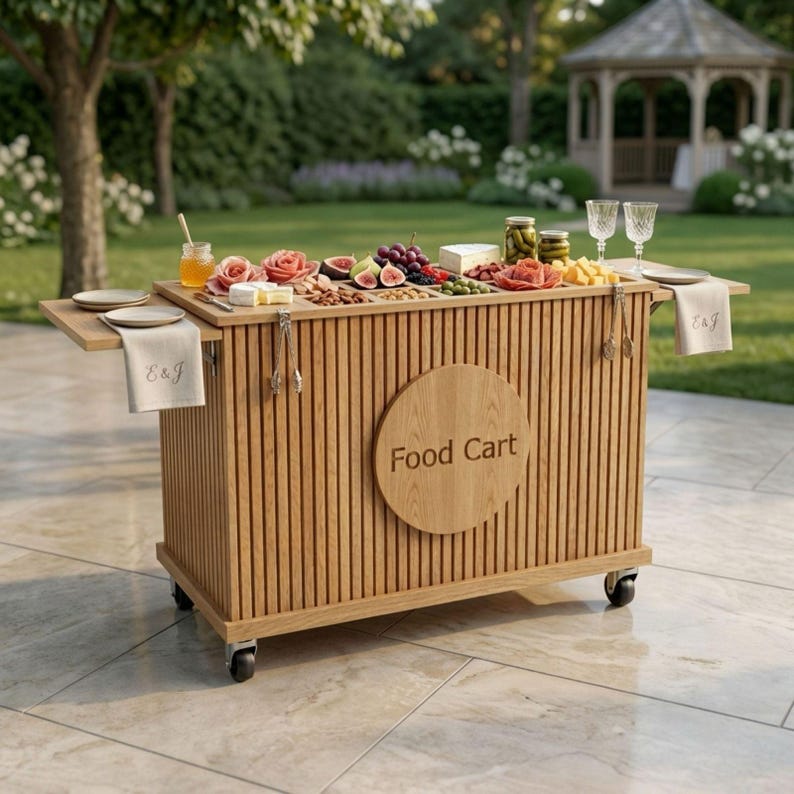
The charcuterie cart buyer's guide
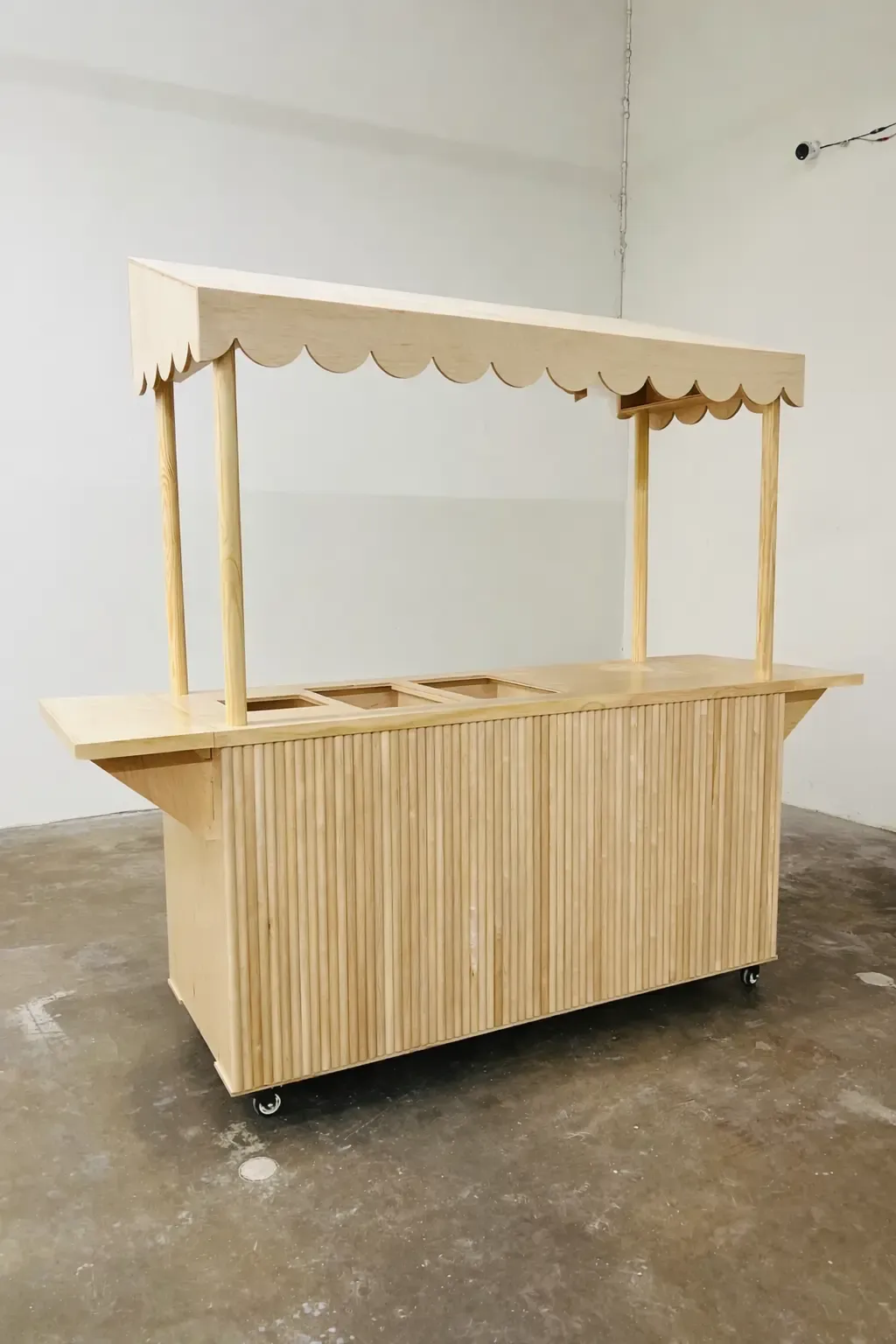
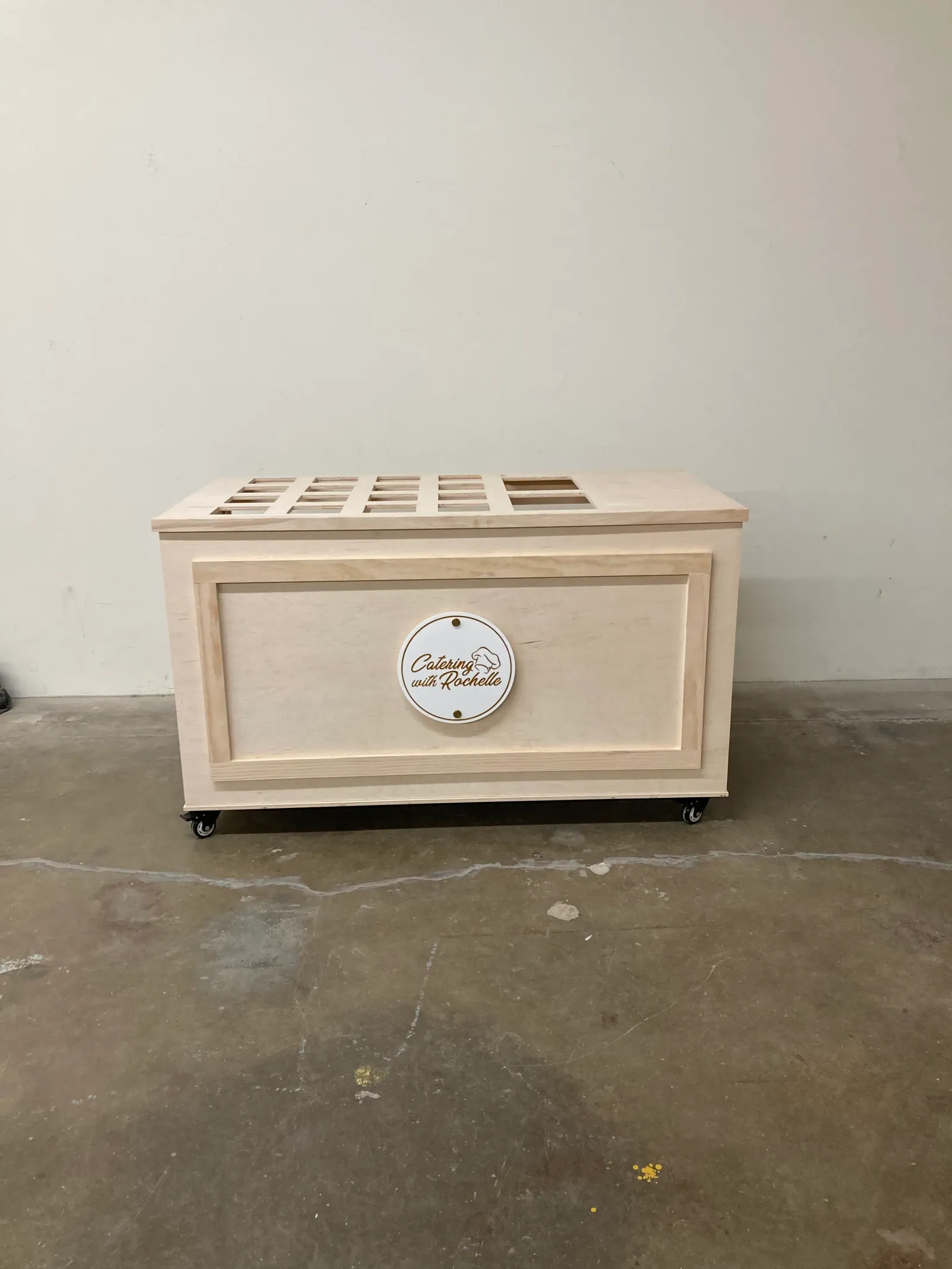
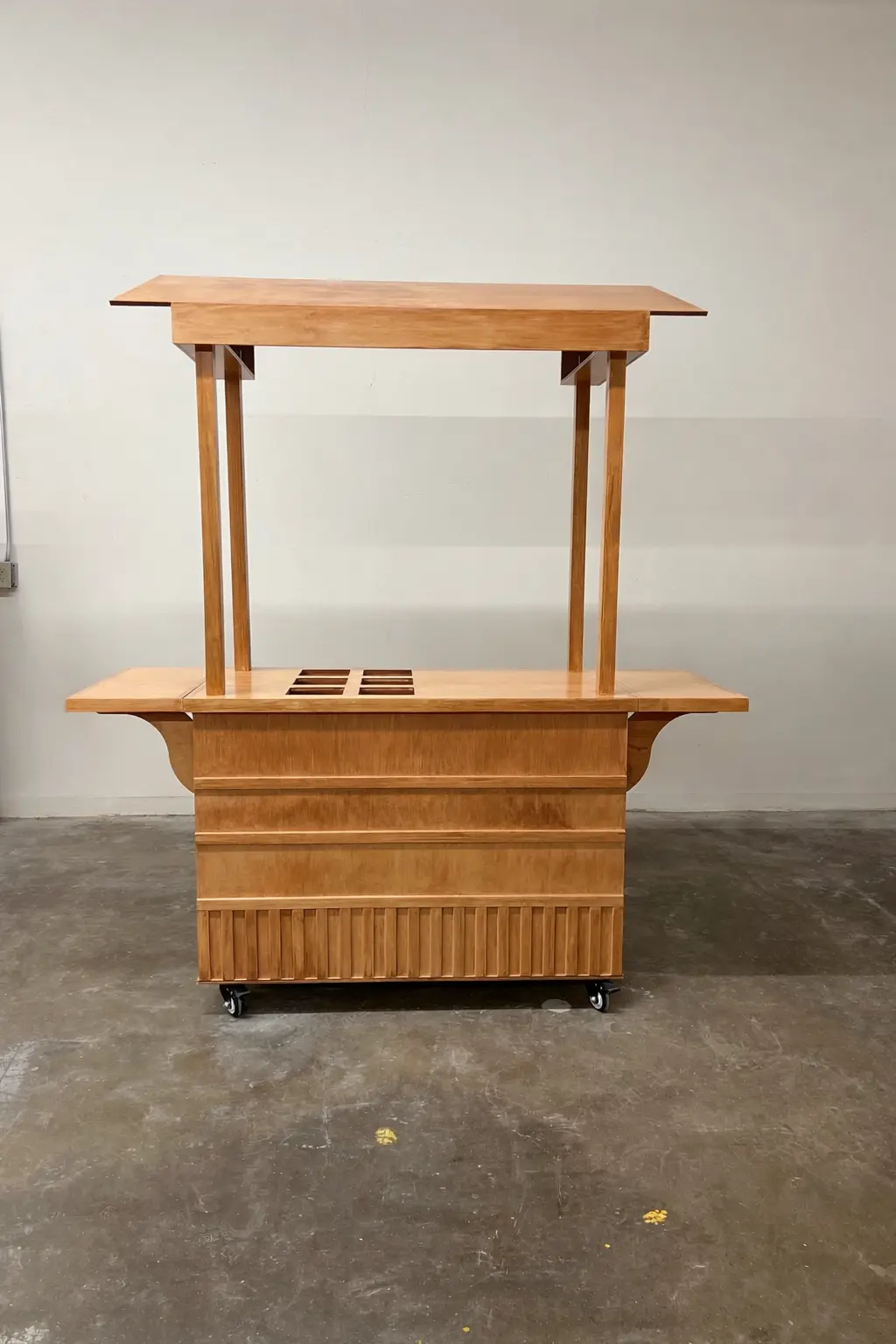
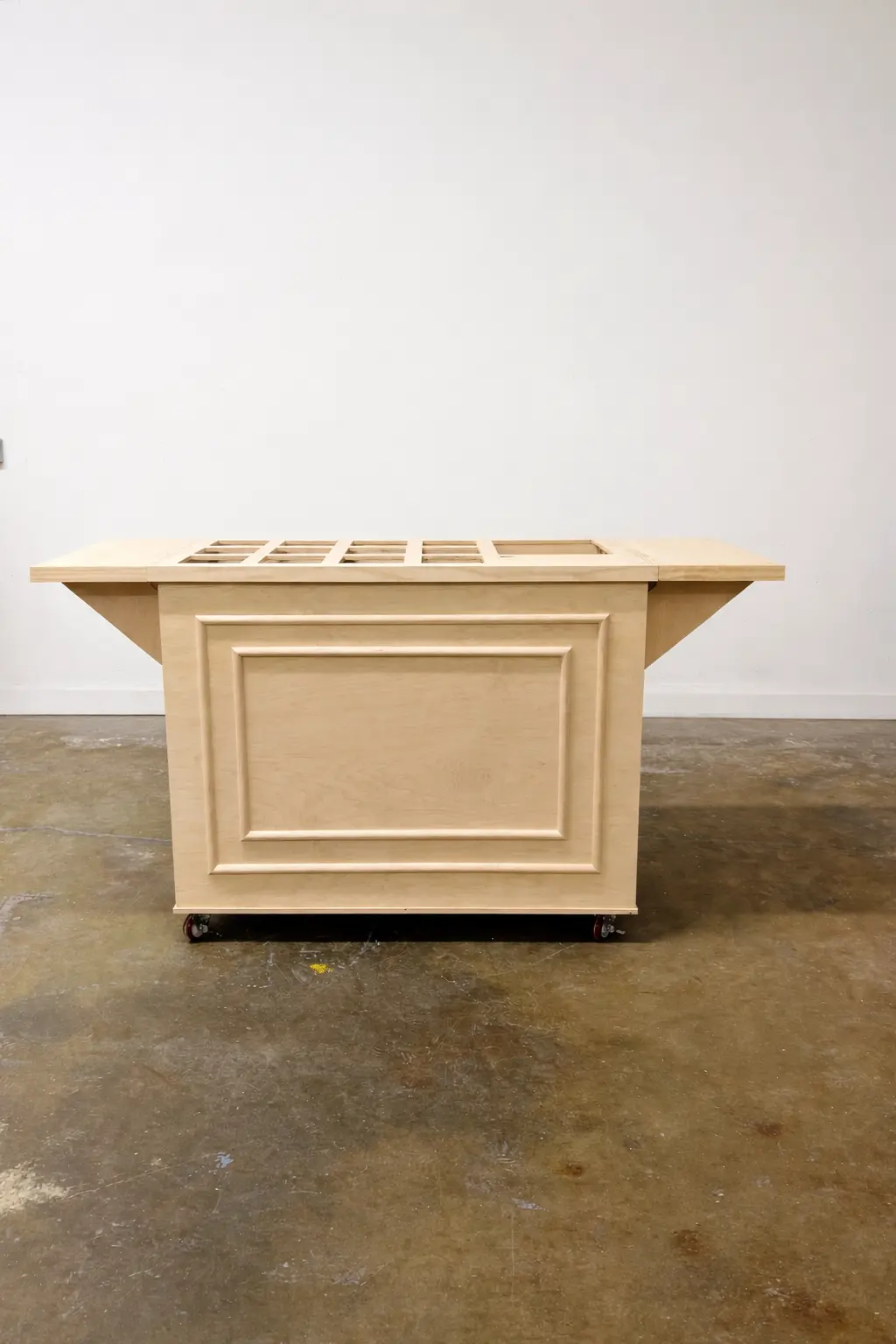
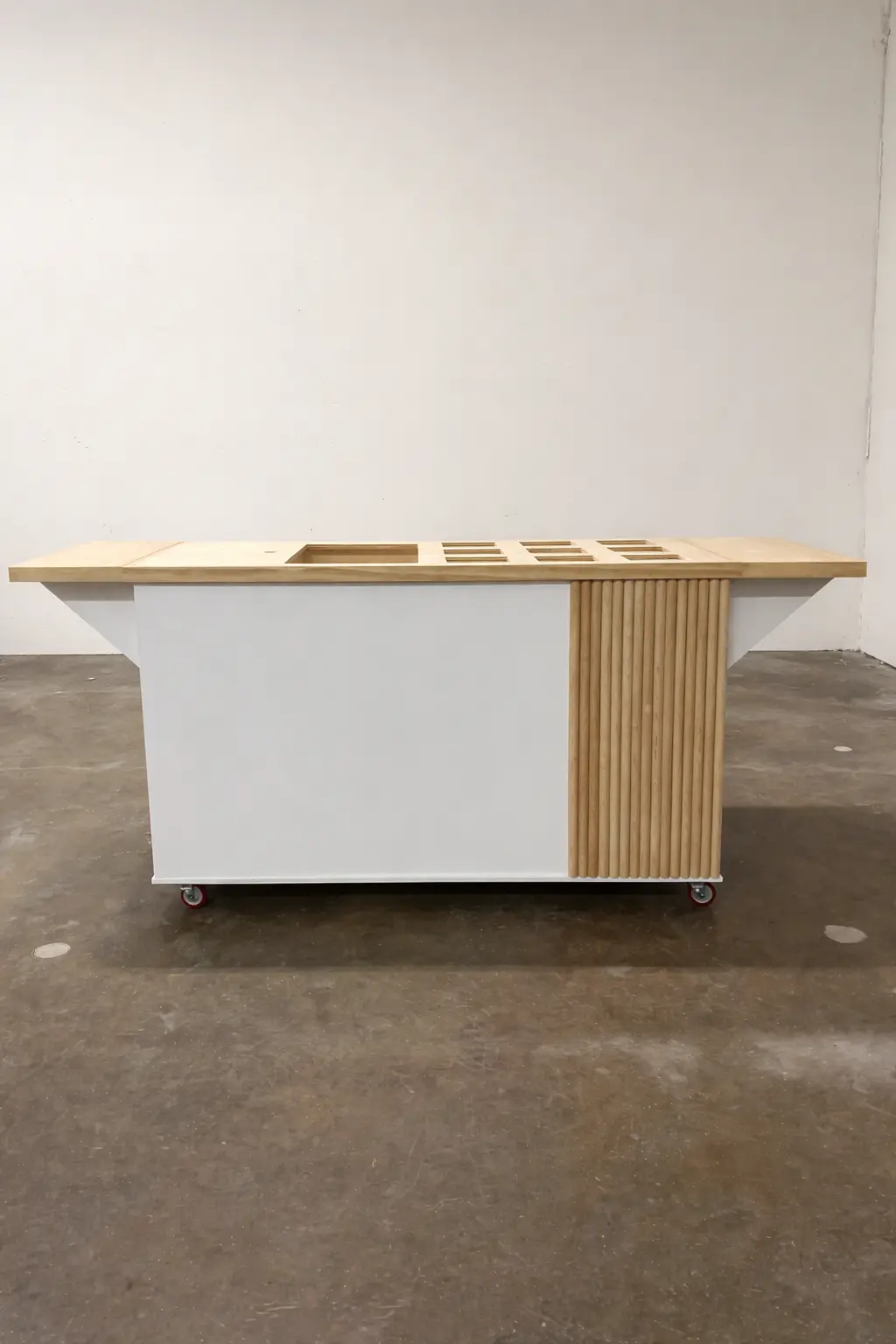
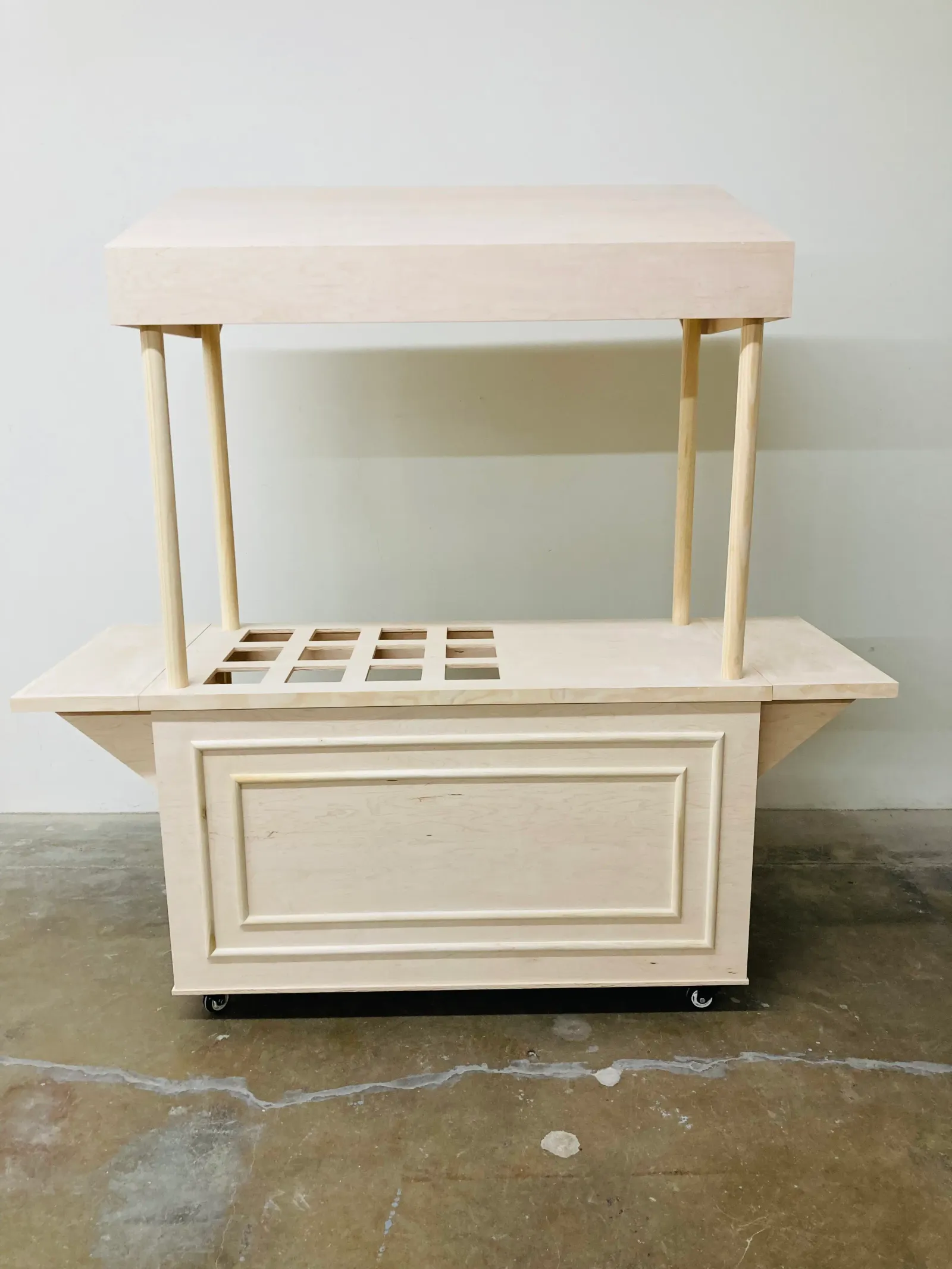
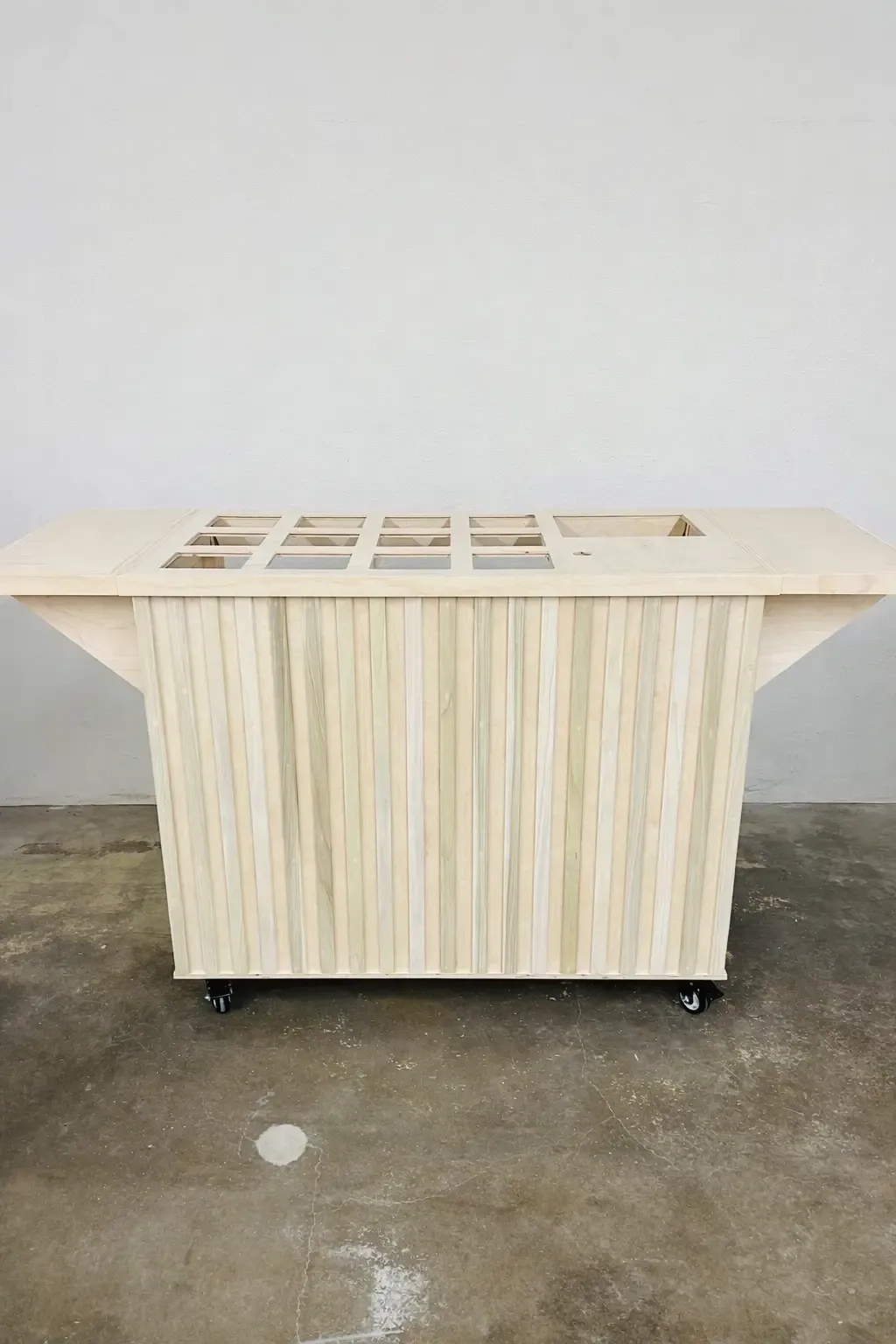
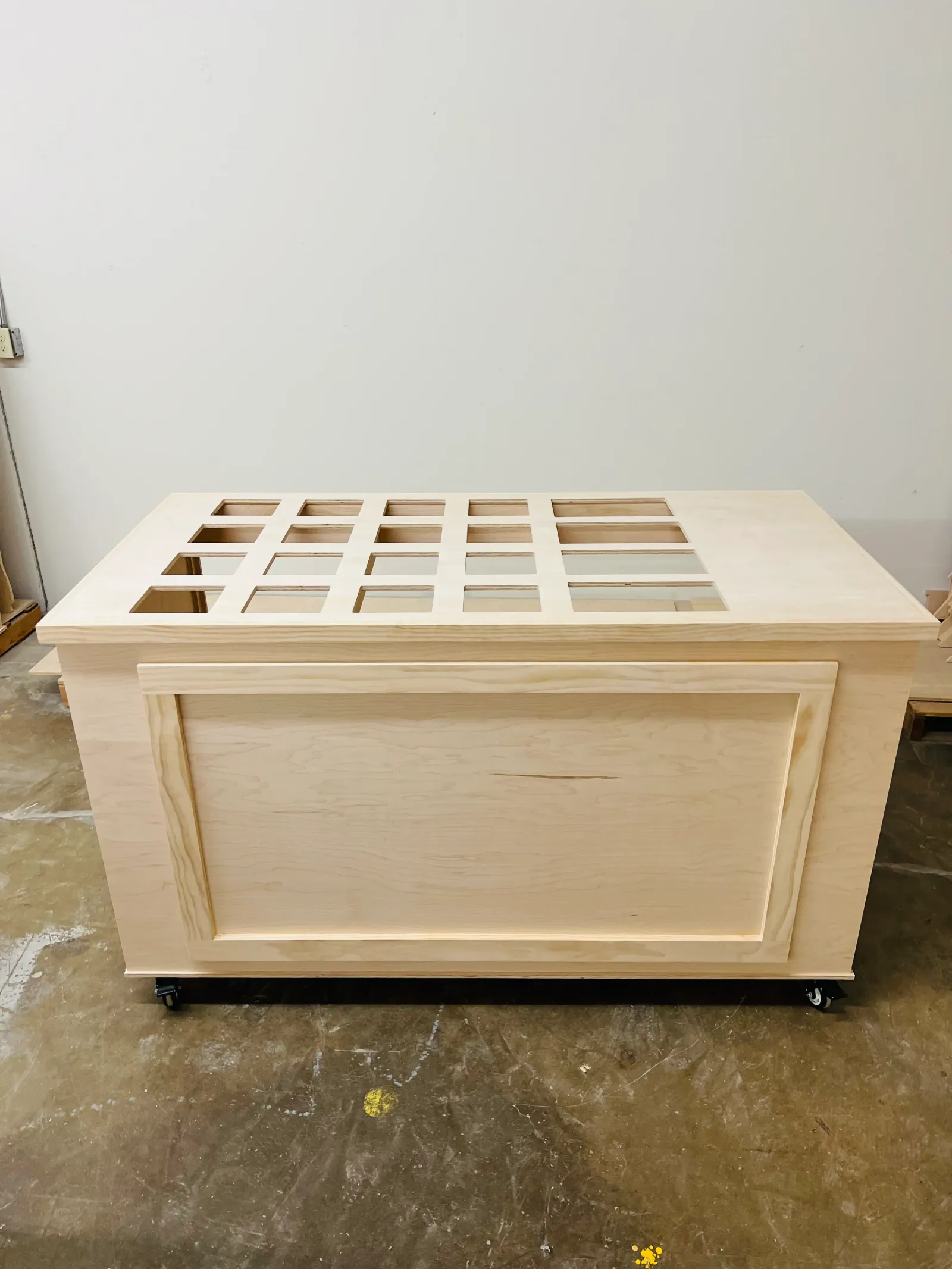
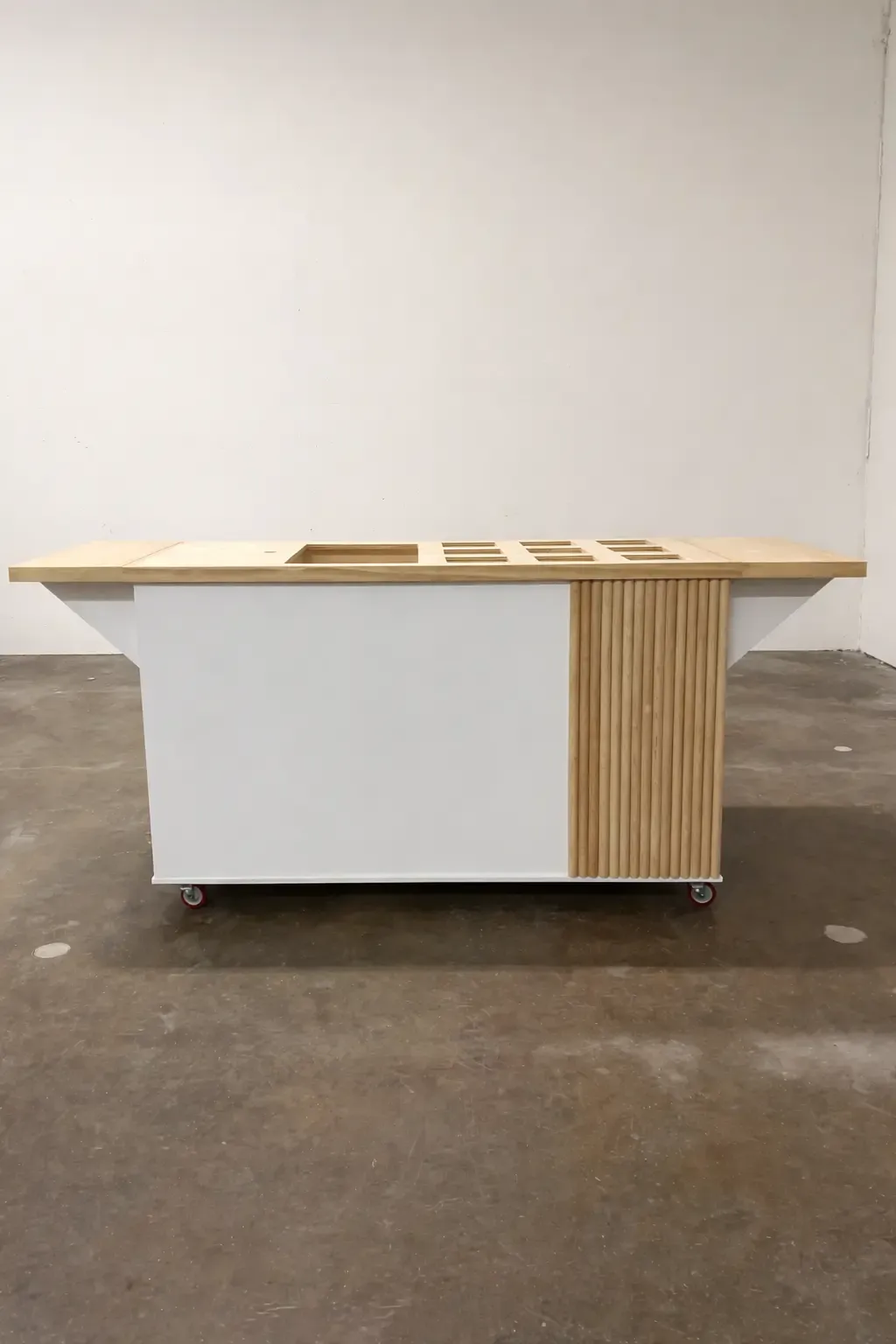
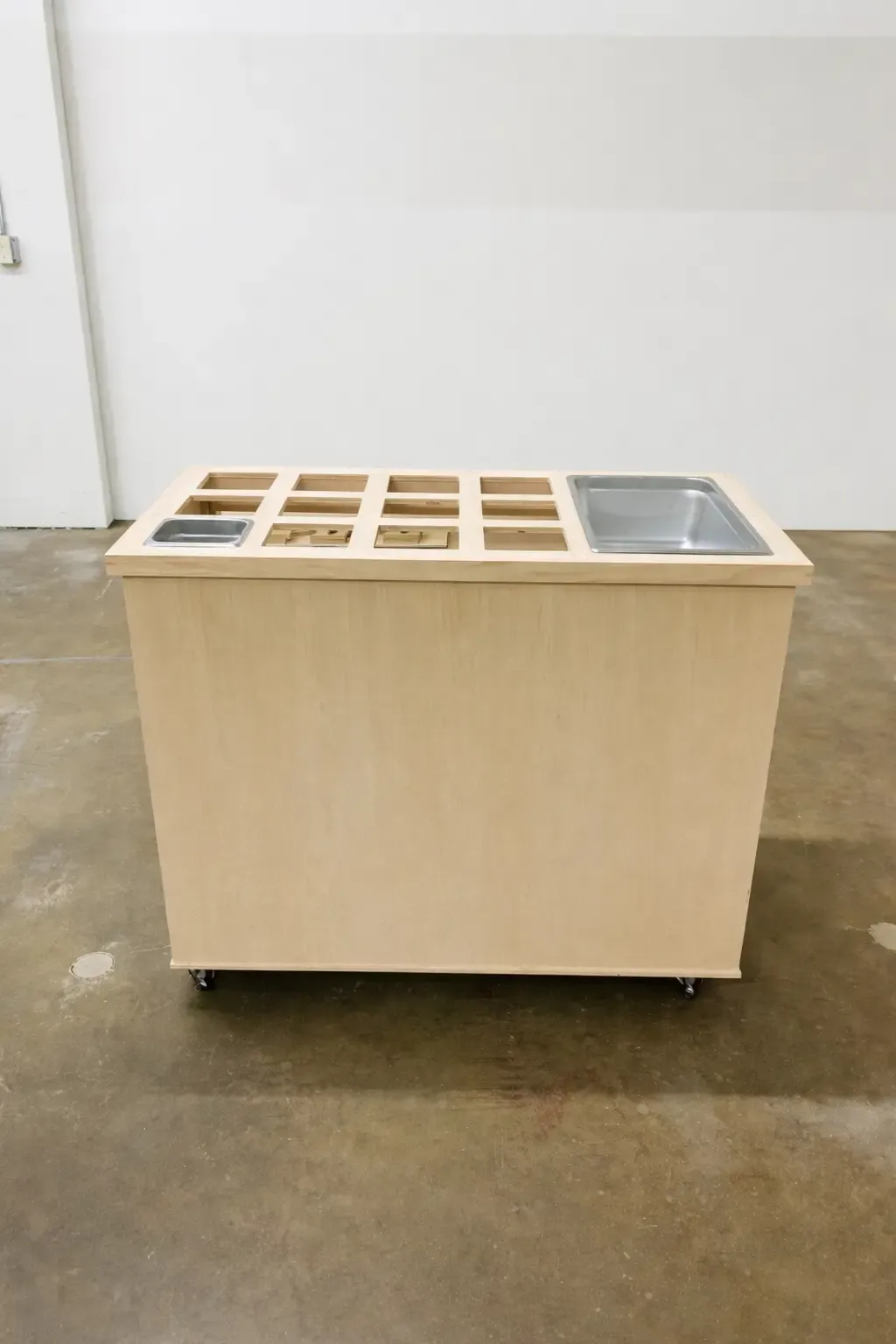
A charcuterie cart is a display piece first: the boards, cheeses and fruit should look abundant, and the cart should frame them without stealing the show. We hand-build wooden grazing carts in our Istanbul workshop for caterers, venues and event planners, sized to your boards and shipped fully assembled.
How to choose a charcuterie cart size and layout
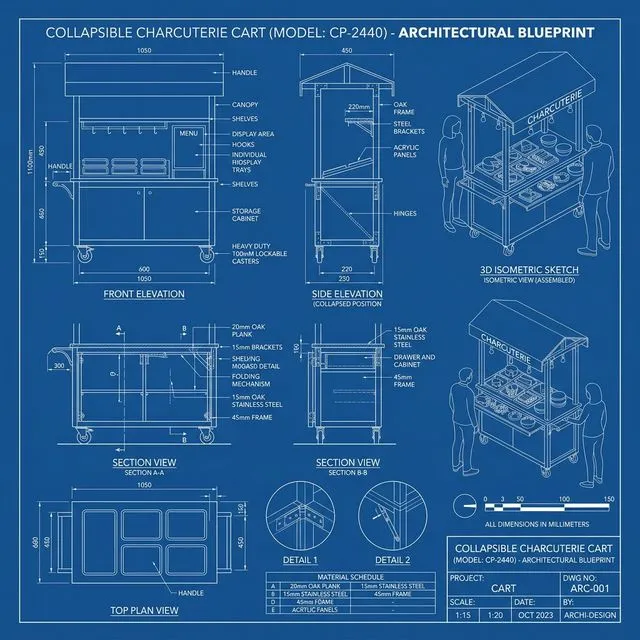
Begin with the boards and platters you already use. A cart for one or two large boards can be 36 to 48 in wide, while a full grazing display for a wedding often needs 60 to 72 in of top surface. Leave a few inches around the edges so guests can reach in without knocking items off.
Tiered shelves add height and help a display look full with less product. A two- or three-level layout lets you put cheese wheels and breads up high, cured meats at eye level and small bowls of jams, nuts and crackers along the front edge.
Plan the service side too. A lower shelf or closed cabinet behind the display holds backup boards, plates, napkins and utensils so staff can restock without leaving the station. Measure venue doors and elevators before you settle on size, since a wide grazing cart still has to fit through them fully assembled.
Charcuterie cart materials and food-safe surfaces
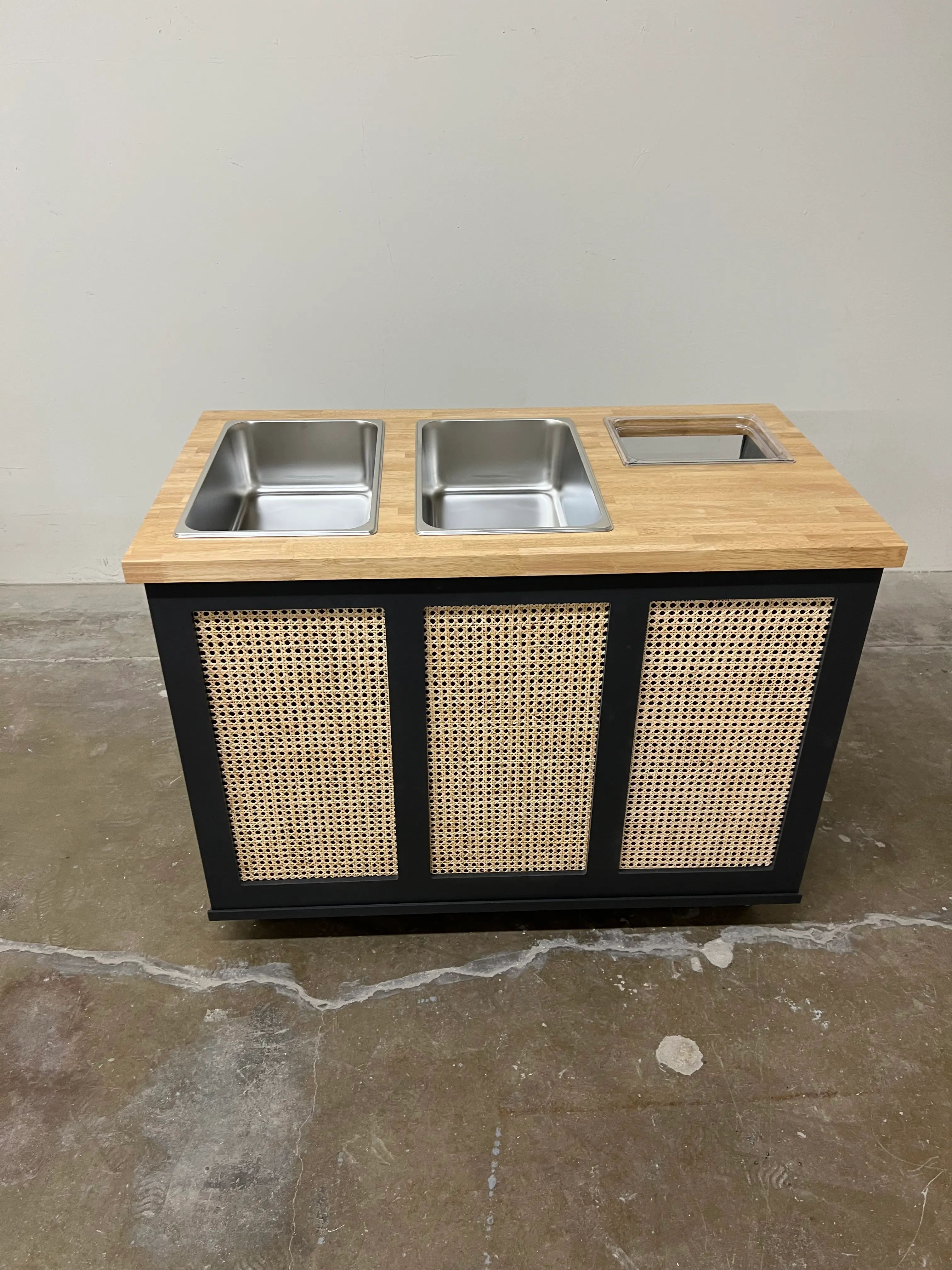
Wood is the natural partner for charcuterie, but surfaces that touch food or sit under platters must be sealed. We finish every cart with a durable, food-safe sealer and can add removable trays or cutting-board inserts that go to the sink for washing.
Many caterers serve on their own boards, marble slabs or slate, and use the cart as a stable base. If you do, tell us the size and weight of your serving pieces and we will plan the top and shelf supports to match, with a lip or rail to keep items from sliding when the cart moves.
Keeping food cold and safe on a grazing cart
Cheese, cured meat and dairy dips need temperature control during longer events. Common solutions include ice trays under platters, a recessed well for a chilled pan, or a cabinet that holds a cooler for restocking. We build the cart to fit the method you prefer; we do not supply refrigeration.
Health rules for open food displays vary by area. Many US health departments expect a handwashing option nearby and set time limits for cold food left out. Check with your local health department, and plan sneeze guards or covers if your venue or inspector asks for them.
Canopies, signage and custom branding
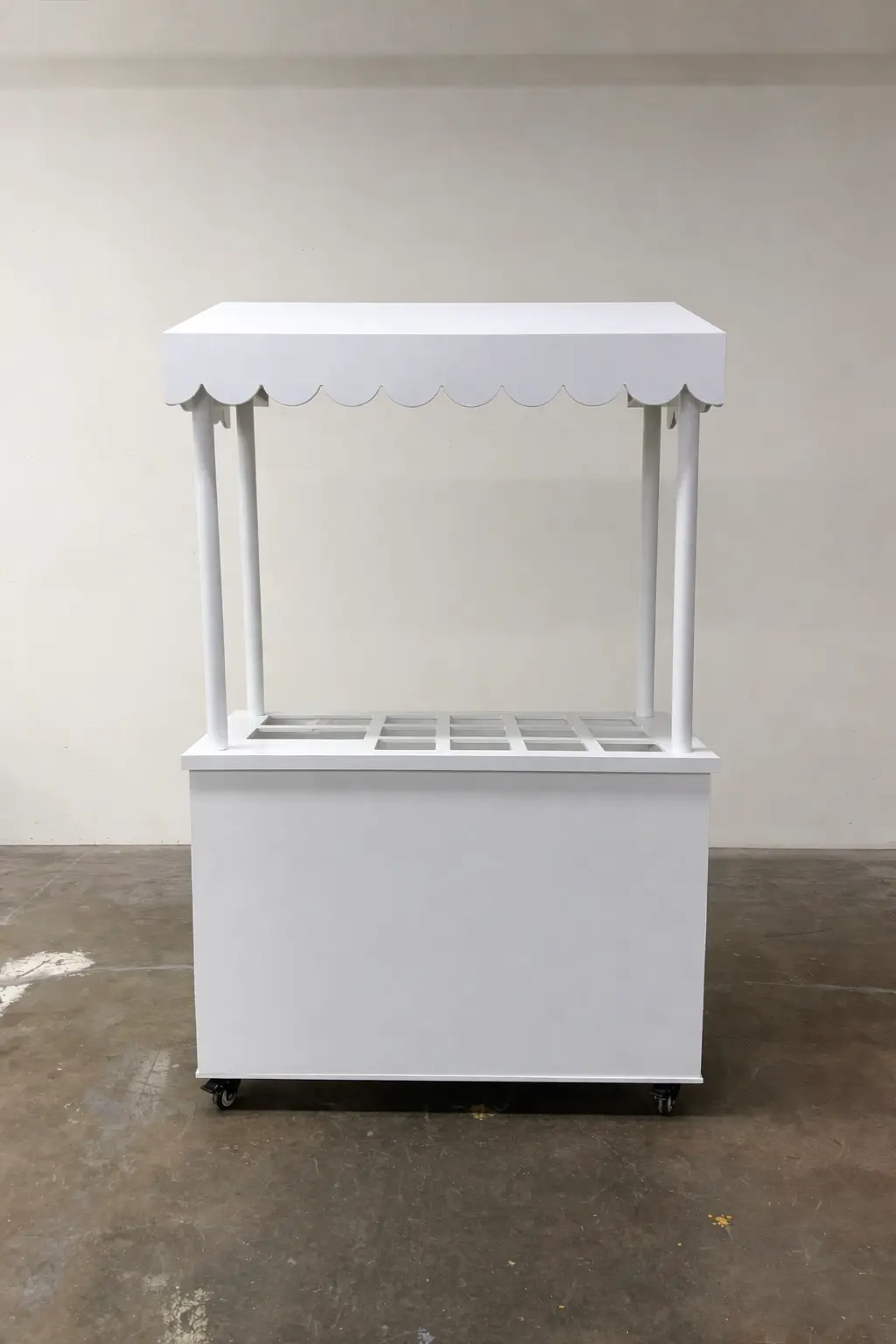
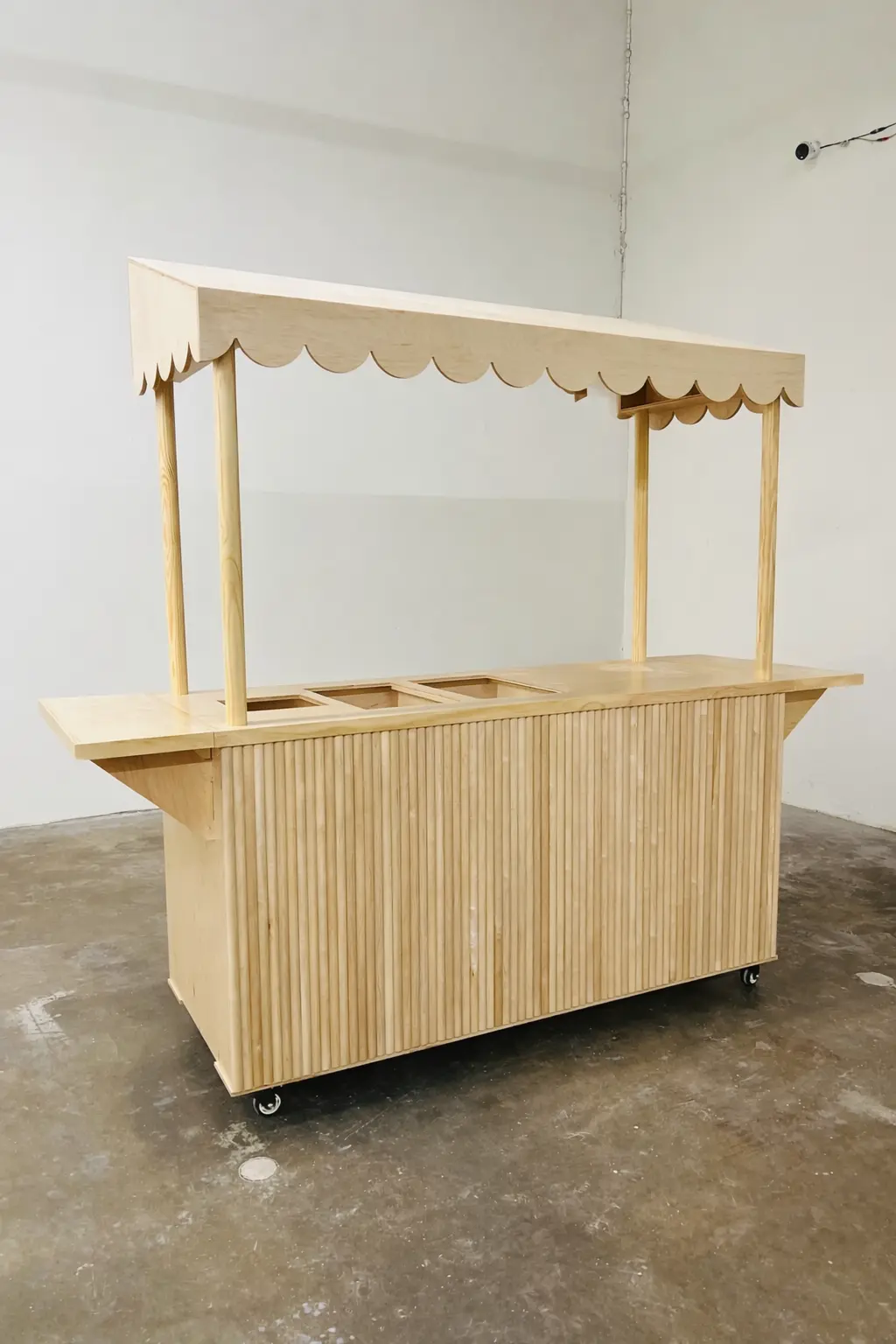
A canopy turns a cart into a destination at an event and gives you a place to hang a menu or sign. Options include fixed or removable canopies, chalkboard front panels and display ledges for business cards or small packaged goods.
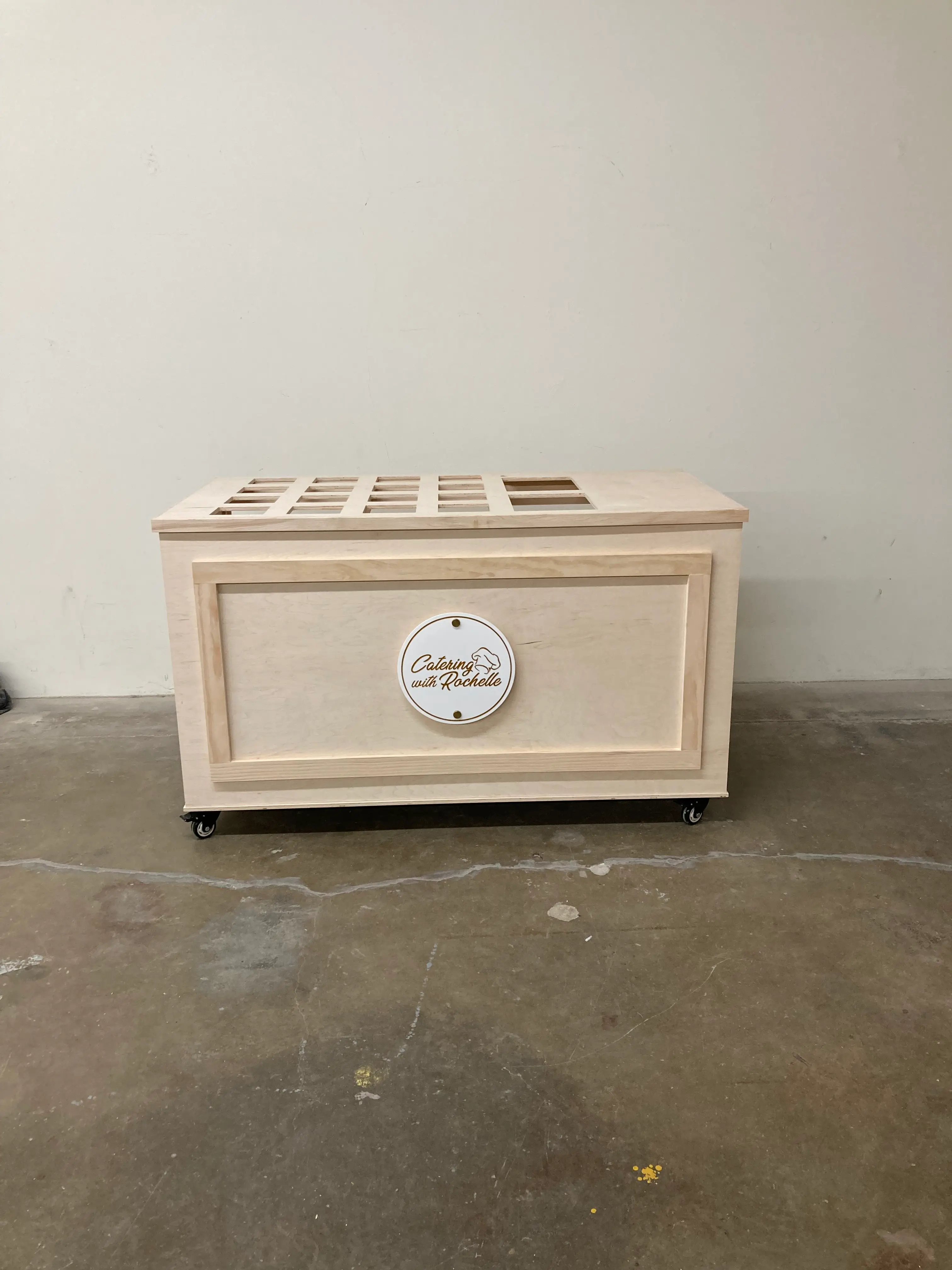
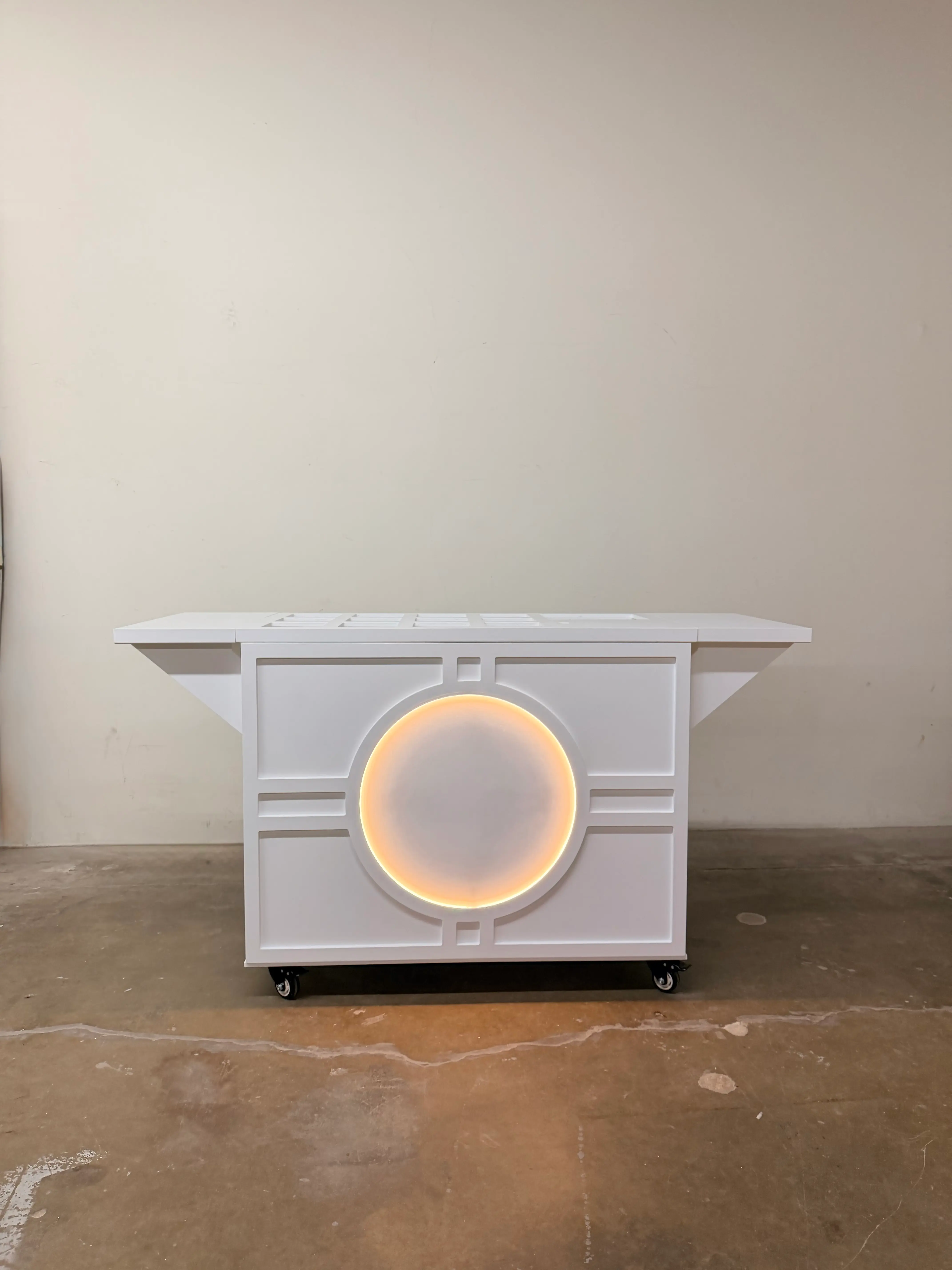
We CNC laser-engrave logos into front panels, canopy boards and serving trays, and offer custom paint and stain colors so the cart matches your brand or a venue's decor. You approve the design before we start building.
Shipping, setup and care
Most custom builds leave the workshop within 5 to 7 business days of design approval and ship fully assembled in ISPM-15 wooden crates with insured freight. There is nothing to put together when it arrives.
After each event, remove trays, wipe surfaces with a mild cleaner and dry them fully. Avoid soaking wood or using harsh degreasers. Refresh the finish on high-traffic edges when it looks dull, and reach out anytime through our lifetime workshop support.