How Much Does a Coffee Cart Cost in 2026? A Full Startup Budget
A line-by-line 2026 budget for a mobile coffee cart: the cart itself, espresso equipment, power, permits, insurance and opening stock — plus how it compares to a coffee truck.
- Published
- Read
- 5 min
 Business Guides
In this article · 11 sections
- 01Quick Answer: Total Startup Cost at a Glance
- 02The Cart Itself: $999 – $3,000
- 03Espresso Machine & Grinder: $2,500 – $18,000
- 04Power and Water: $300 – $5,000
- 05Smallwares and Opening Stock: $800 – $2,500
- 06Permits, Licences and Insurance: $500 – $3,000 per Year
- 07Branding and Point of Sale: $300 – $2,000
- 08Coffee Cart vs. Coffee Truck: Cost Comparison
- 09How Quickly Can a Coffee Cart Pay for Itself?
- 10How to Keep Your Startup Costs Down
- 11Frequently asked questions
The honest answer to "how much does a coffee cart cost?" is: less than most people expect for the cart, and more than most people expect for everything that goes on and around it. The cart is the foundation, but the espresso machine, grinder, power, permits and opening stock usually decide your real launch budget.
This guide breaks the cost down line by line so you can build a realistic 2026 budget — whether you are planning a weekend events business or a daily pitch outside an office building. Figures for third-party equipment and fees are typical US ranges; always confirm permit and insurance costs with your local authority and broker.
1. Quick Answer: Total Startup Cost at a Glance
Most mobile coffee cart businesses launch somewhere between $8,000 and $30,000 all-in. Where you land depends mainly on two choices: the espresso machine and how you power it.
| Setup | Typical total | Who it suits |
|---|---|---|
| Lean starter | $8,000 – $12,000 | Weekend markets and private events, 1 barista |
| Professional events cart | $15,000 – $22,000 | Weddings, corporate catering, 100+ drinks per event |
| High-volume daily pitch | $25,000 – $30,000+ | Fixed daily locations, two-group machine, 2 baristas |
2. The Cart Itself: $999 – $3,000
The cart is your counter, your storage and your storefront. A commercial-grade cart needs a sealed, wipe-clean worktop, room underneath for water containers and equipment, and lockable casters that one person can move.
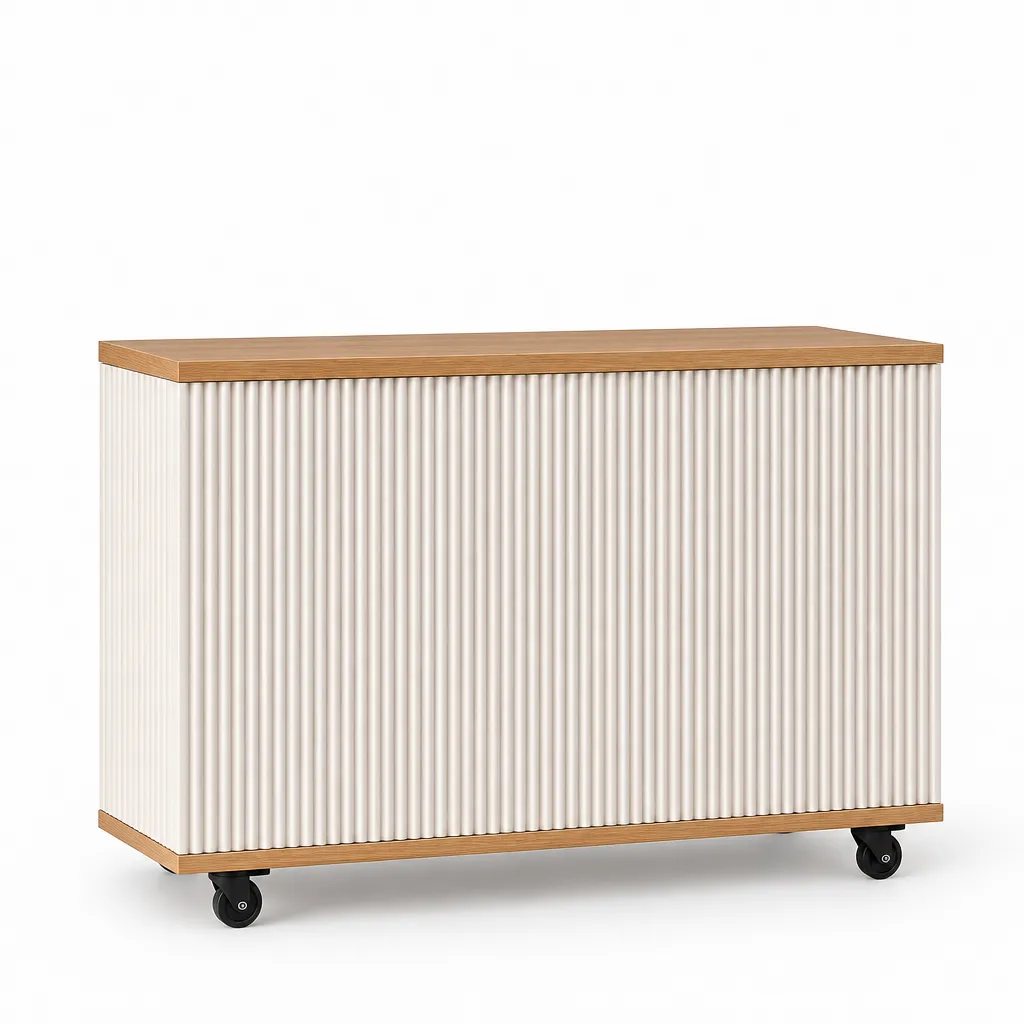
- Compact espresso carts ($999 – $1,500): ideal for a single-group machine and a lean menu. Our Collapsible Fluted Espresso Cart and The Espresso Cart start at $999.
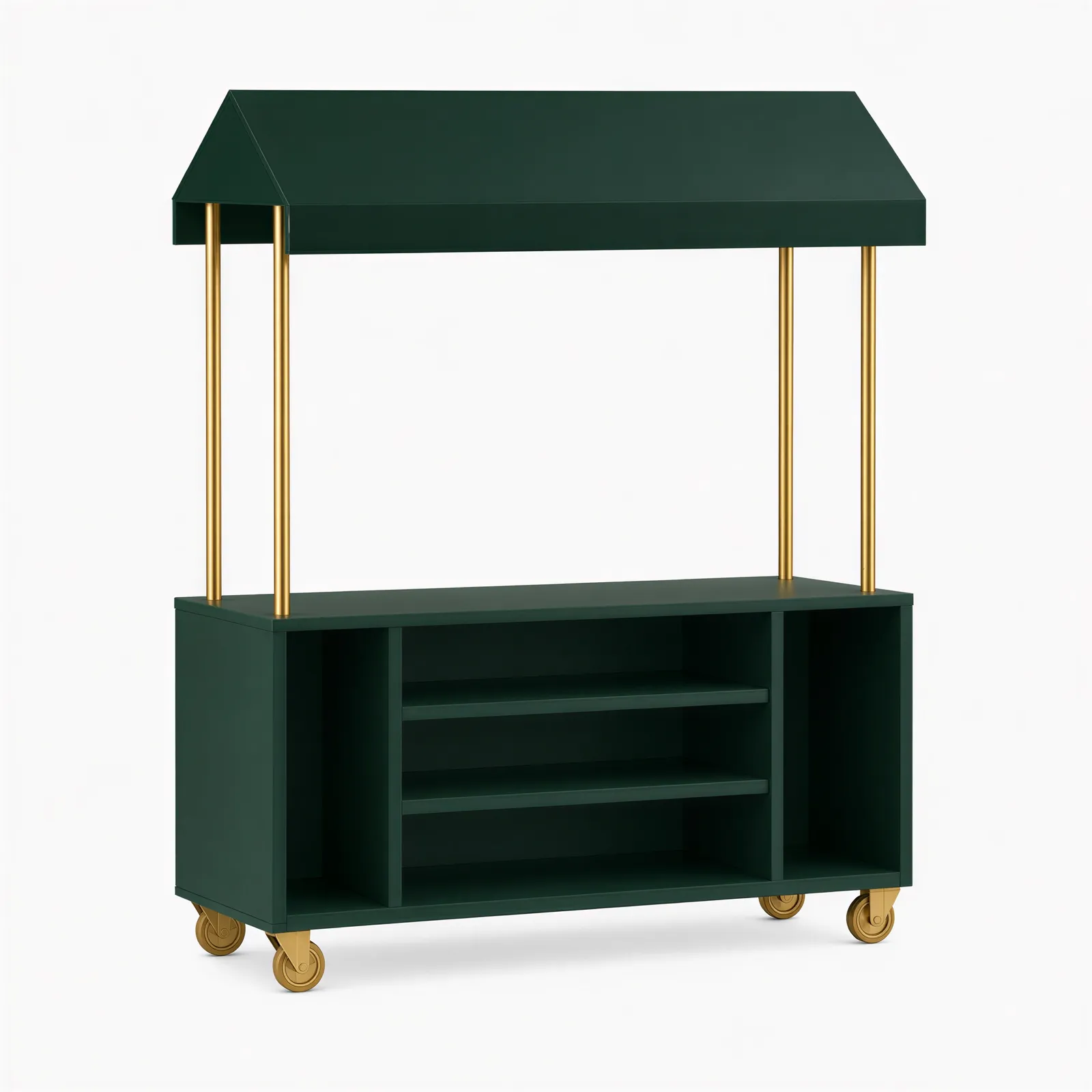
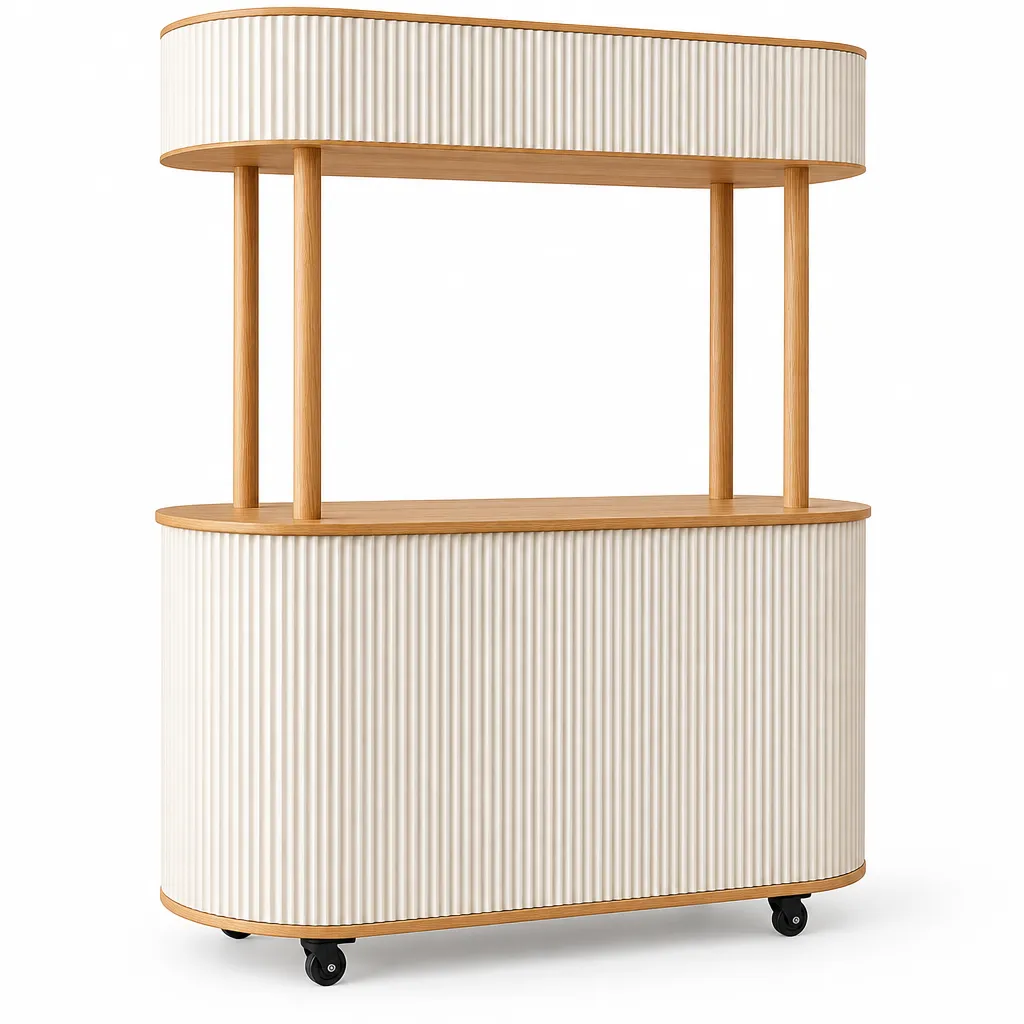
- Full commercial coffee carts ($2,499): wider counters, canopies for menus and lighting, and more storage — for example the Nordic Mobile or Grande Mobile.
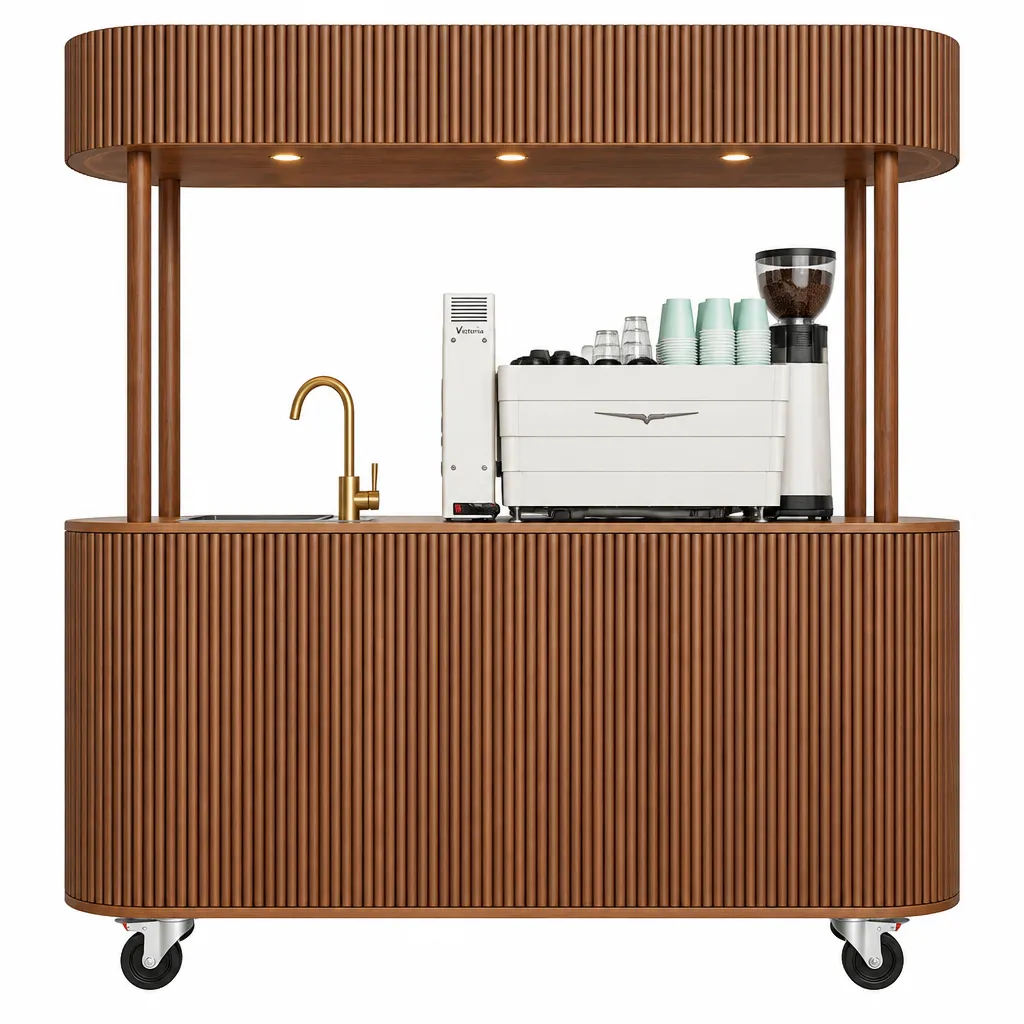
- Carts with an integrated sink ($2,999): the Collapsible Coffee Cart With Sink builds hand-washing into the body, which many health departments require.
All of our carts ship fully assembled with complimentary freight delivery, and collapse tool-free for transport. If you need a specific size or branding, you can design your own cart.
3. Espresso Machine & Grinder: $2,500 – $18,000
This is the single biggest variable in your budget.
| Equipment | Typical range | Notes |
|---|---|---|
| Single-group commercial espresso machine | $2,000 – $6,000 | Fine for ~100–150 drinks per event |
| Two-group commercial espresso machine | $6,000 – $15,000 | Needed for queues and two baristas |
| Commercial espresso grinder | $800 – $3,000 | Never cut corners here — it drives taste and speed |
| Second grinder (decaf / guest bean) | $500 – $1,500 | Optional |
Buying good second-hand machines from a reputable refurbisher can cut this line by 30–50%.
4. Power and Water: $300 – $5,000
Espresso machines draw a lot of power, so plan this early.
- Venue power: $0 if your venues provide a dedicated circuit — common for weddings and corporate events.
- Inverter generator: roughly $1,000 – $3,500 for a quiet unit sized for your machine. Check event rules on noise and fuel.
- Battery power station: $2,000 – $5,000+; silent and venue-friendly, but size it carefully against your machine's wattage.
- Water system: $300 – $1,500 for fresh and grey-water containers, a pump and a hand-wash setup.
5. Smallwares and Opening Stock: $800 – $2,500
Milk pitchers, tampers, knock box, scales, refrigerator or cooler, cups and lids, syrups, milk, and your first coffee order. Budget for at least two to three events' worth of consumables before revenue starts flowing.
6. Permits, Licences and Insurance: $500 – $3,000 per Year
Requirements vary widely by city and county, so treat these as planning numbers:
- Business registration and licence: often $50 – $500.
- Health permit / mobile food permit: commonly $100 – $1,000 per year, sometimes per event.
- Food handler certification: usually under $200 per person.
- General liability insurance: often $400 – $1,500 per year; many venues require a certificate before you can trade.
- Commissary kitchen (if your area requires one): monthly fee, varies by city.
7. Branding and Point of Sale: $300 – $2,000
Logo panels, a menu board, a card reader and a simple website. A clean, branded cart is your best marketing — it is what guests photograph. If you want a site that ranks for local coffee-catering searches, see our website & SEO service for cart businesses.
8. Coffee Cart vs. Coffee Truck: Cost Comparison
| Coffee cart | Coffee truck / trailer | |
|---|---|---|
| Vehicle / unit | $999 – $3,000 | $40,000 – $150,000+ |
| Indoor venues | Yes — rolls through doorways | No |
| Running costs | Low — no engine, no vehicle insurance | Fuel, maintenance, vehicle insurance |
| Best for | Events, weddings, corporate, pop-ups | Street vending at scale |
For most first-time operators, a cart gets you trading for a fraction of the cost and opens indoor venues that trucks can never reach.
9. How Quickly Can a Coffee Cart Pay for Itself?
Event coffee is usually priced per guest or as a flat package rather than per cup. If you book a handful of events a month, a lean setup can earn back its cost within the first season. Use our coffee cart catering calculator to work out drinks per hour, staffing and pricing for your own events.
10. How to Keep Your Startup Costs Down
- Start with a single-group machine and upgrade when queues prove the demand.
- Choose a collapsible cart that fits in a standard van — no trailer needed.
- Book venues that provide power before investing in a generator or battery.
- Pick a cart with an integrated sink if your health department requires hand-washing.
- Keep the menu short: 6–8 drinks done fast and well beats 20 done slowly.
Ready to price your own setup? Browse our coffee carts, or talk to our workshop about sizes, branding and lead times.
Frequently asked questions
How much does a coffee cart cost?
The cart itself typically costs $999 – $3,000. A complete, ready-to-trade coffee cart business — including espresso machine, grinder, power, permits and opening stock — usually costs $8,000 to $30,000.
What is the most expensive part of starting a coffee cart?
The espresso machine and grinder. A commercial single-group machine is around $2,000 – $6,000, and a two-group machine $6,000 – $15,000, plus $800 – $3,000 for a commercial grinder.
Is a coffee cart cheaper than a coffee truck?
Yes. A coffee cart costs a fraction of a truck or trailer, which usually starts around $40,000, and it has no engine, fuel or vehicle insurance costs. Carts can also work indoors at weddings and corporate venues.
Do I need a permit to run a coffee cart?
In most places, yes. Expect a business licence, a health or mobile food permit and liability insurance. Requirements and fees vary by city and county, so check with your local health department before you launch.
Topics
- Coffee Cart Cost
- Startup Budget
- Mobile Coffee Business
- Coffee Cart vs Truck
- Espresso Equipment
Part of the Cart for Business workshop team, designing and building commercial coffee, bar and food carts.
About our workshopBuild your business today.
Explore turnkey commercial carts or design your own — shipped ready to trade.